Best Time of Year to Buy a Used Car

Seasonal Price Swings, Regional Nuance, and Timing Tactics That Save Thousands

WINTER 2025

The Winter Sweet Spot

You can buy a used car any day. But if you care about paying thousands less for the same vehicle, timing isn't a detail—it's apply. The USA used-car market moves in predictable waves shaped by dealer quotas, tax refunds, weather, and new model arrivals. Learn the patterns, and you'll stop guessing. You'll start saving.

Let's cut straight to the headline: late December through early February is the sweet spot, year after year, across most of the USA. The data is not subtle. Price indices from CarGurus and Edmunds show average dips of roughly 10–20% versus summer peaks, with an iSeeCars analysis pegging the winter drop at a striking 15.7%. Dealers clear the decks to close their fiscal year, free up floorplan credit, and make room for new model trade-ins. Buyers who show up when sales teams are exhausted and inventory managers are anxious—those buyers tend to win.

"Buyers saved a collective $4 billion by waiting out the holidays"

And yet, winter isn't the only window. Late summer—August into September—brings another downshift as new model-year cars hit showrooms and used trade-ins pile up. You won't always see the same depth of discount you get in January, but 8–12% off typical asking prices is common. Labor Day weekend? Real money on the table.

None of this is academic. In 2025, 20.4 million used cars changed hands in the USA, according to Edmunds. A larger share of those deals—22%—landed in Q4, when buyers collected average savings of $2,100 compared with Q2. Inventory climbed 14% into early 2026. More choice. More pressure on prices. More opportunity if you know when to pounce.

Winter Price Floor: Why December to February Delivers the Deepest Discounts

Dealerships in the USA don't operate on vibes. They operate on targets—monthly, quarterly, and especially year-end. When the calendar flips toward December, the pressure mounts. Unsold vehicles drag on floorplan financing, new models squeeze the lot, and managers are staring down final numbers. That's the "quota hangover" you've heard economists talk about.

Chicago's January 2025 Clearance

One large dealer flushed 300 used F-150s at 22% off, with buyers reporting steals of $28,000 on trucks that sat at $36,000 a month earlier. When storms roll through, dealers watch foot traffic vanish, creating brief, deep discounts.
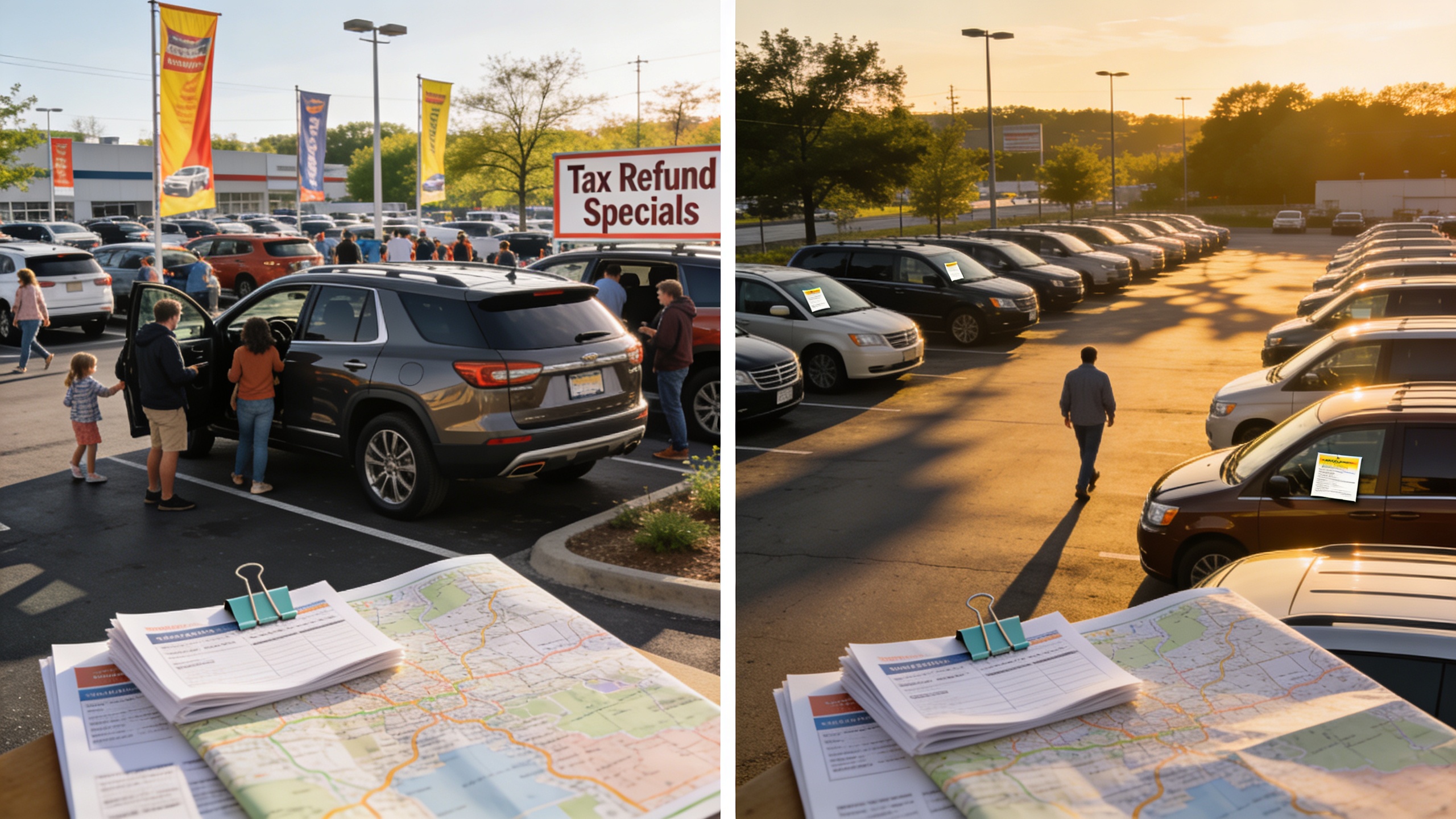
Side-by-side spring rush with families buying SUVs and a calm late-summer lot presenting lowered prices, illustrating timing to avoid the spring surge and capture late-summer bargains

Beware the Spring Surge

Spring punishes hesitation. Tax refunds hit—averaging $3,116 per filer per the latest IRS figures—and demand surges. Families planning summer travel pull SUVs and minivans off lots. From March through June, pricing rises 12–18% on average. You'll feel it within a zip code, even more around fast-growing metros.

"Wait until late March, and one in twelve deals under $20,000 shrinks to a sliver"

Ivan Drury at Edmunds calls February the hidden sweet spot for a reason: wait until late March, and one in twelve deals under $20,000 shrinks to a sliver compared with one in five in February. If you must buy in spring, focus on segments that buck family-season trends—compact sedans, older luxury with higher miles, or EVs where local incentives shift demand sideways.

Then there's late summer. August into September quietly rewards disciplined buyers with 8–12% markdowns as 2026 models arrive and trade-ins overflow. Holiday weekends—especially Labor Day—amplify discounts. Not January-deep, but very real. And because selection improves with trade-ins, picky shoppers often find the exact trim-color-mileage combo they wanted.

Segment Quirks to Watch

  • EVs and plug-in hybrids: 2025 brought a 31% decline in used EV pricing. Battery warranties and software updates made Q1 a bargain bin.
  • Trucks in the Midwest: Winter oversupply created outsized deals—up to 25% better than national averages.
  • California's EV tilt: February discounts reached 17% for sedans as trade-ins surged after federal credit adjustments.

Transparent Car Pricing in USA: How to Structure the Deal

Buying at the right time won't help if the math is murky. The USA's FTC CARS Rule tightened the screws on drip pricing, but enforcement varies and old habits die hard. Your shield is a disciplined, transparent negotiation process that measures the entire deal—vehicle price, fees, financing, and add-ons—without getting trapped in monthly-payment theater.

Ask for a written, out-the-door quote that includes everything but state taxes and DMV fees. If a store won't provide it, move on. Plenty will. Really, a new crop of digital-first sellers has normalized upfront car pricing—no phone dance, no "market adjustment," no surprise nitrogen in the tires.

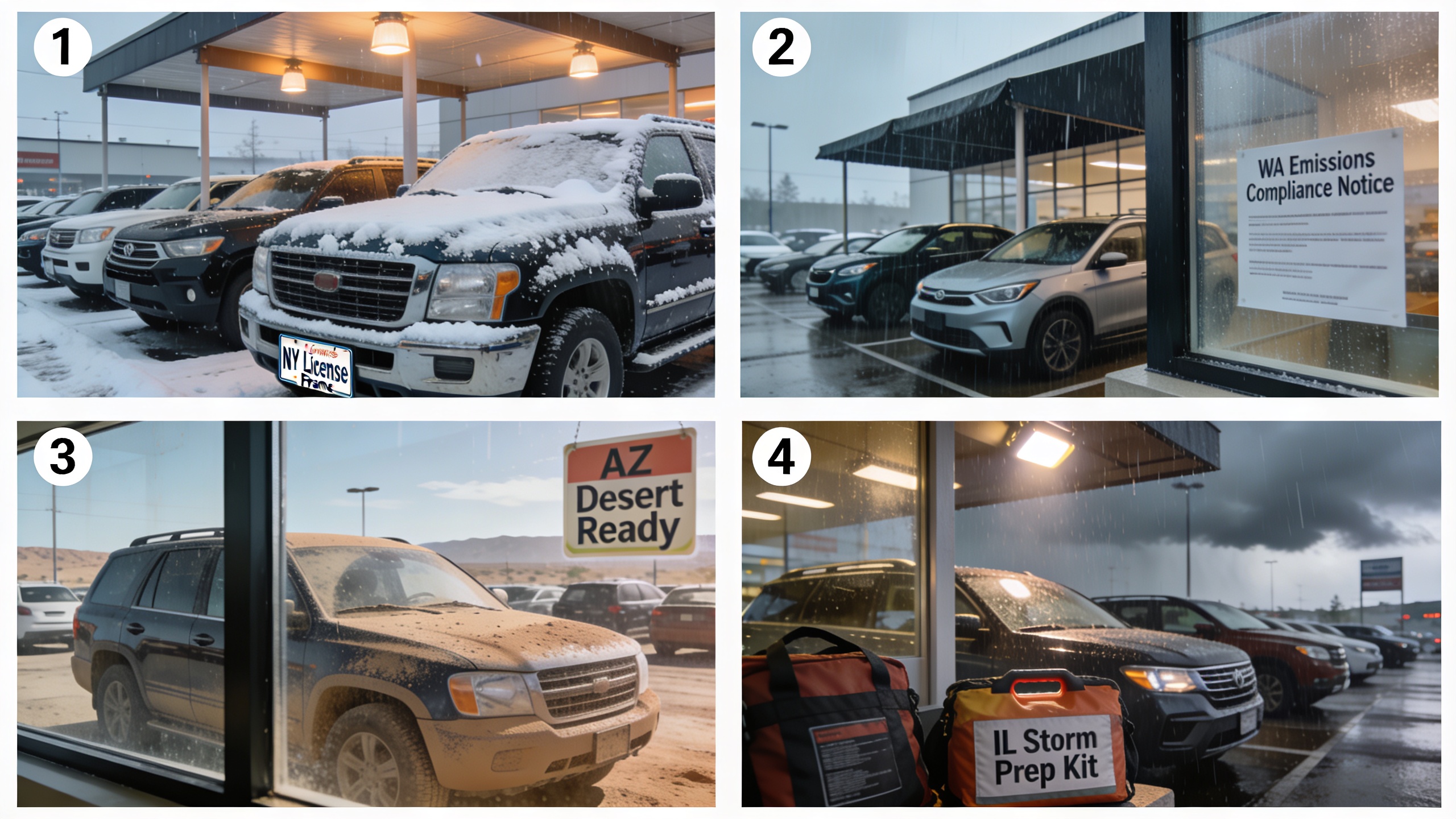
Four-region montage of dealership lots showing Northeast snow, Pacific Northwest rain, Southwest sun, and Midwest storm preparedness to illustrate regional pricing realities and original owner used cars wholesale differences

Regional Realities Across the USA

The USA isn't one market. It's many. Winter in Boston is a negotiation tool; winter in Phoenix is patio weather. Policy in California isn't policy in Texas. Recognizing these micro-markets can add another 3–5% to your savings.

Northeast: Storm-Driven Discounts

When storms roll through, dealers watch foot traffic vanish. That creates brief, deep discounts—think 18–20% on all-wheel-drive wagons and crossovers—especially in late December when quotas collide with low demand. A Boston December 2024 clearance moved 1,200 units at 18% off. Blink-and-you-miss-it pricing.

Midwest: Truck Country

Trucks and SUVs back up during prolonged cold snaps. In Chicago's January 2025 purge, buyers grabbed F-150s with average savings near $6,800. Ohio and Michigan showed similar patterns, with better-than-average winter truck discounts due to inventory bloat.

Sun Belt Steadiness—and Exceptions

  • Florida, Arizona, Nevada: Pricing is steadier year-round, yet late December and early January still soften numbers.
  • Texas heat waves: Sustained triple-digit days dent SUV demand, trimming prices by roughly 13% in localized windows.

Real Dealership Results

Boston, December 2024: A multi-store group ran 18% off across 1,200 vehicles, producing a $15 million Q4 surge. Weather plus quotas plus thin showroom traffic—textbook alignment.

Los Angeles and San Diego, February 2026: Post-credit shifts sent a wave of Tesla and Chevy trade-ins into the used channel. A San Diego Chevy rooftop moved 150 Bolt EVs at 19% off in days.

Month-by-Month Strategy

December–February: Strike while quotas wobble

  • Target: Sedans, trucks in cold-weather metros, prior-year EVs
  • Expected savings: 10–20% off typical asking; average 15.7% nationwide
  • Tactics: Shop between Dec 26 and Jan 10; take advantage of days-on-lot over 60

August–September: The second chance

  • Target: Popular trims as trade-ins flood; midsize SUVs; off-lease sedans
  • Expected savings: 8–12% vs. spring; best selection of the year
  • Tactics: Pounce on price drops near Labor Day; ask for transport credits
"Buy when the market is soft, verify the car's story, and keep the deal clean"

Five Closing Moves That Separate Pros from Impulse Buyers

  • Time box your search: 21 days in winter, 14 in late summer. Urgency beats drift.
  • Quote apples-to-apples: same trim, miles within 3,000, similar options. Then negotiate.
  • Refuse payment talk until OTD is final. Monthly math hides margin.
  • Inspect and scan: third-party inspection plus a quick OBD-II read for hidden codes.
  • Leave room for logistics: shipping can be cheaper than compromising $2,000 on price.

Buy when the market is soft, verify the car's story, and keep the deal clean. Do that, and the USA's seasonal rhythm will do the heavy lifting. Wait a week too long? You'll feel it. Hit the trough just right? You'll remember that win every time you turn the key.