How Much Car Can You Actually Afford?

A Real-World Budget You'll Actually Use

WINTER 2025

I still remember the Saturday I almost talked myself into a car my wallet couldn't carry. Sun on the hood, sales guy doing that soft-shoe charm, and me thinking about road trips I hadn't planned yet. That's the moment I learned something the hard way: the car payment isn't the car. It's just the downbeat of a very long song—insurance, gas or charging, taxes, maintenance, all of it swaying along behind you.

So let's set down the fantasy keys for a second and do the kind of math that keeps your future self smiling. This is a USA-specific, no-nonsense framework that I use, friends use, and readers write back to thank me for—because it respects the life you're actually living.

"Cars are tools, not trophies."

The USA Reality

Prices, Rates, and Why Budgets Break

Sticker shock is real right now. The average new car price in the USA has climbed to about $48,759, used cars hover near $27,500, and loans aren't cheap—recent averages land near 7.8% for new, with subprime borrowers getting walloped in the double digits. Payments? Around $742 for new and $525 for used. No wonder so many folks feel like their paycheck turns to fumes by the 20th of the month.

Stack those numbers against a typical American paycheck. Median household income sits near $80,610, and once taxes and retirement contributions come out, the monthly take-home in many places lands around five grand. Then housing, groceries, childcare, and student loans arrive with their lunch trays. In higher-cost states—California and much of the Northeast—car costs often chew into 12–15% of income. In parts of the South—Georgia, Florida, Texas—you might see closer to 10%, but it's creeping up as insurance and financing rise.

The Hidden Costs

A reminder from AAA: true ownership costs can top $12,000 a year when you count everything. I've sat in the office where the pen glides across yet another form—"protection package," "reconditioning fee," "nitrogen tires," and a doc fee that somehow grew legs. That's the kind of nickel-and-diming that turns plans into potholes.

Longer loans don't fix it either. Stretching to 72 or 84 months can mask the hit, but you usually pay more interest and risk going upside-down. Experian's recent data showed roughly 49% of buyers owing more than their car's worth at some point during the term. That's a stomach-drop stat, and it's way more common than anyone brags about online.

Young couple calculating a car affordability score on a tablet with a 10–15% take-home target, visualizing how to keep car costs within budget

The Framework

Your Car Affordability Score

I lean on a simple, durable target: keep your total monthly car costs—payment, insurance, fuel or charging, maintenance—between 10% and 15% of your take-home pay. Not gross. Take-home. That range flexes for the USA's regional quirks and gives your budget room to breathe when, say, your kid's soccer cleats and the water heater throw a surprise party.

Step one is carving out your car bucket from reality, not fantasy. Start with monthly net income. Subtract the essentials—housing, utilities, food, minimum debt payments—and a non-negotiable slice for savings. What's left is lifestyle money. Your car sits inside that, not on top of it. For many households, this lands the car allowance squarely in the $400–$800 zone. Doesn't sound glamorous. Feels amazing when your stress level drops.

"Keep your total monthly car costs between 10% and 15% of your take-home pay."

Step 1: Size the Bucket

  • Monthly take-home: write it down.
  • Essentials: rent/mortgage, utilities, groceries, childcare, minimum debt payments.
  • Savings: aim for 10% (or at least something automatic—future you says thanks).
  • Car allowance: target 10–15% of take-home for all-in car costs.

Step 2: Price It the 5-Year Way

Use this back-of-the-envelope to cap the car's price: Max vehicle price ≈ (your monthly car allowance × 60) ÷ 1.3. That 1.3 buffer bakes in interest, taxes, and the sneaky bits. Example: if $600/month is your all-in allowance, your cap is roughly $27,700. Then sanity-check the add-ons: insurance around $2,000–$2,501 a year (varies wildly by state), fuel or charging maybe $1,500–$2,000 for 12,000 miles, maintenance $1,200–$1,800 depending on the car.

Step 3: Stress-Test Your Life

Before you fall in love, rattle the doors. Add $200/month if you've got a teen driver coming soon. If you're going electric, factor a home charger and your local kWh rate; federal tax credits can soften the blow, but rural charging in parts of the USA still lags. Snowbelt states might mean winter tires. City living? Insurance often leaps 15–25% thanks to theft and traffic density. You're not just buying a car—you're buying your lifestyle's side effects.

  • Kids on the policy: brace for a bump.
  • EVs: check eligibility for federal and state incentives.
  • Climate: Midwest winters, coastal storms—budget for tires or higher premiums.
  • Commute length: more miles, more wear, more fuel or charging.

Step 4: Bend Without Breaking

Used cars 2–5 years old can thread the needle: less depreciation, modern safety. A down payment—10% is good, 20% is great—shrinks both risk and rate. And if your current ride still runs, keep it a bit longer while you pad the emergency fund. That month or two of extra saving buys use you can feel.

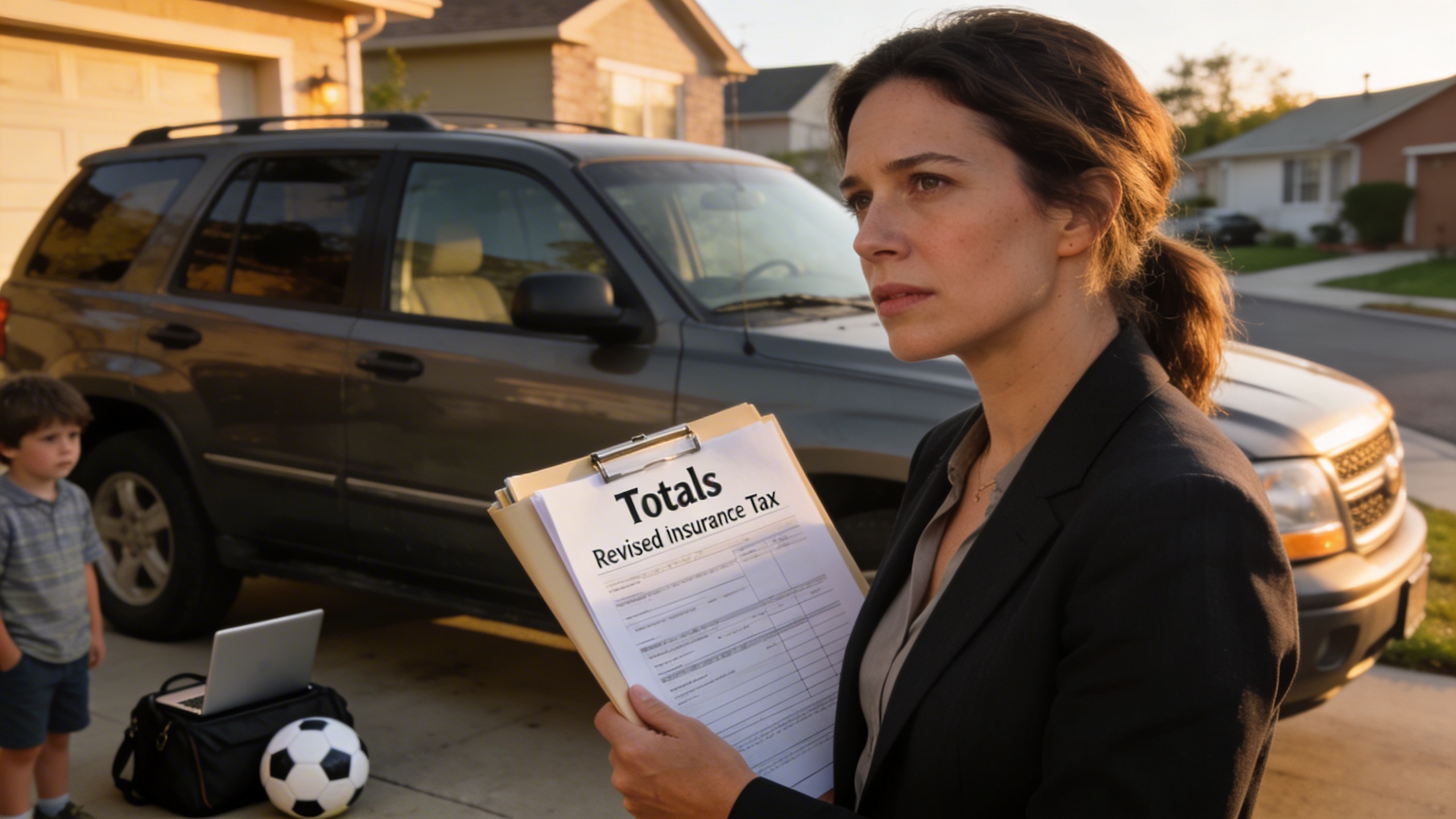
Woman standing by her SUV holding insurance and tax paperwork after a high-cost loan, a real dealership result story about total car costs and budget adjustments

Dealership-Free Car Buying in USA

Transparent car pricing that actually sticks

Let's talk tactics, because math without moves won't get you keys. Yes, you can buy a car online without salespeople breathing down your neck, and it's not just for tech bros on the coasts. Platforms that publish out-the-door numbers and line-item fees keep everyone honest. I've compared quotes on sites that behave like a sane friend—VirtualCarHub.com among them—and the calm that comes from clear pricing is worth its weight in brake pads.

So why are online car prices so high right now? A mix: lingering supply constraints, pricier financing, and the industry's love affair with add-ons and "market adjustments." The Consumer Financial Protection Bureau has tightened the leash on junk fees, which helps, but you still need to ask the question that tilts the room: "What's the out-the-door price?" Don't haggle features—negotiate the bottom line.

How to Avoid Dealer Fees

Here's how to avoid dealer fees when buying a car, without turning it into a second job. Get preapproved with a credit union or trusted bank before you shop; dealers sometimes mark up rates. Separate your trade-in from the purchase—two deals, two targets.

Some states limit doc fees, others don't, and taxes vary, so don't compare stickers across state lines without adjusting for your ZIP. You're not being difficult by asking for clarity. You're being an adult.

  • Ask for the out-the-door price in writing: base price, taxes, title, registration, all fees.
  • Decline add-ons you didn't ask for: paint sealant, nitrogen, VIN etching, mystery packages.
  • Bring your preapproval. If the dealer can beat it, great—on the same term, no surprises.
  • Budget the insurance quote before you sign. A $70/month surprise can sink your plan.
  • Time it if you can—month's end can loosen pens, but don't chase a deal you can't afford.
"What's the out-the-door price?"

Dealership-free car buying in the USA doesn't mean zero humans. It means fewer games and more daylight. Transparent car pricing lets your budget call the shots, not the pressure of a Saturday clock.

Real Dealership Results

Sarah in Atlanta wrote me after a bruising year. Marketing manager, $75,000 salary, 72-month loan on a $42,000 SUV at just over 8%. The payment alone didn't look crazy on paper, but Georgia's taxes and her rising insurance nudged the total to nearly 18% of take-home. Her fix came in two steps: she sold the SUV into a hot used market, bought a three-year-old sedan at a number that kept her all-in near 12%, and directed the freed-up cash to rebuild savings she'd paused. Breathing room, back.

Then there's Mike and Lisa near Denver. Two incomes, one kid, snow tires every winter—they wanted the EV life without turning their budget into a lab experiment. They set a 12% cap for total car costs, took the federal credit where it applied, and double-checked electricity rates before buying. Payments landed near $650, fuel savings around $150 a month, and they're on track to pay off early.

A Cautionary Tale

And the cautionary tale I wish I didn't see as often: Jamal in Detroit, steady work at the plant until it wasn't. A $38,000 truck at a steep rate left him vulnerable when overtime dried up. Within months, the math stopped humming. The truck went back, debt didn't. He told me one thing he'd do differently: "I would've bought the payment I could miss without panicking." That line lives rent-free in my brain.

If you want the no-drama route, start with your number and defend it. Compare out-the-door figures, not just ads. If a site like VirtualCarHub.com lays out every fee up front, use that as your truth table and make sellers match it. This is the USA—we've got fifty flavors of taxes, insurance, and weather. Your budget has to be local, stubborn, and kind to your actual life. Do that, and you'll own the car without it owning you.