How to Read a Vehicle History Report

A Step-by-Step Field Guide to Carfax and AutoCheck Red Flags

WINTER 2025

I've lost count of how many buyers told me, "The Carfax was clean, so I thought I was safe." Let me be blunt: a vehicle history report is a tool, not a promise. Used smartly, it saves you thousands. Used lazily, it lulls you into a bad deal you'll regret. In the USA—where 45 million used cars changed hands in 2025—the gap between those two outcomes is a few minutes of careful reading and a handful of verification steps you can do from your phone.

We'll walk through Carfax and AutoCheck line by line. You'll learn what to scan first, why a single word in the title section can end the deal, how to sanity-check mileage, and where flood and structural damage hide. I'll share the same process I teach buyers who get car auction access for buyers in USA through services like VirtualCarHub.com—because whether you're shopping retail or hunting wholesale car auctions for consumers, the red flags don't change. Your discipline does.

"A vehicle history report is a tool, not a promise. Used smartly, it saves you thousands."

Here's the plan. We'll decode the report top to bottom, then pressure-test it with outside sources. I'll sprinkle in real examples from the Southeast (flood risk), the Rust Belt (salt corrosion), and the Southwest (sun and sand wear), because regional quirks matter in the USA. By the end, you'll read a report like a dealer. Better, actually—dealers miss things when they're in a hurry.

Start Where It Hurts

Title Brands and Legal Status

Never skip straight to the "Accident" line. Start at the title history. This is the non-negotiable section that decides whether you keep reading or walk. Carfax and AutoCheck both list the title brand by state and date. You're hunting for words that change everything: salvage, rebuilt, flood, lemon, junk, buyback, hail, not actual mileage (NAM), and manufacturer buyback.

Salvage means the insurer called it a total loss. Many states flag salvage when repair costs hit around 70–80% of market value. California can be stricter—100% in certain cases. Rebuilt means a salvaged car was repaired and retitled for the road. Sounds fine until you realize quality varies wildly; the FTC has flagged that a chunk of rebuilt cars fail safety checks within a year. Flood is the quiet killer: electrical gremlins, corrosion in connectors, mold in seat foam. Lemon or buyback signals chronic defects, often litigated under state lemon laws (California alone pays out around $450 million each year).

Hurricane Migration Pattern

Quick field test: does the title history jump states right after a big storm season? Southeast coast to inland Midwest, post-hurricane? That's suspicious. After Hurricanes Helene and Milton, a wave of flood cars moved north. Some got washed—literally and figuratively—before resale.

Personal rule I give every buyer: if you see flood or salvage and you're not emotionally prepared for a project car, stop. Don't rationalize. There are plenty of clean-title vehicles in the USA market. Why gamble your savings on a science experiment?

What to Verify Outside the Report

  • Run NMVTIS for federal title brand validation.
  • Match the title issuing state to where the seller operates today—sudden cross-country jumps deserve questions.
  • Ask for a photo of the physical title; verify the brand matches the report and the seller's name.
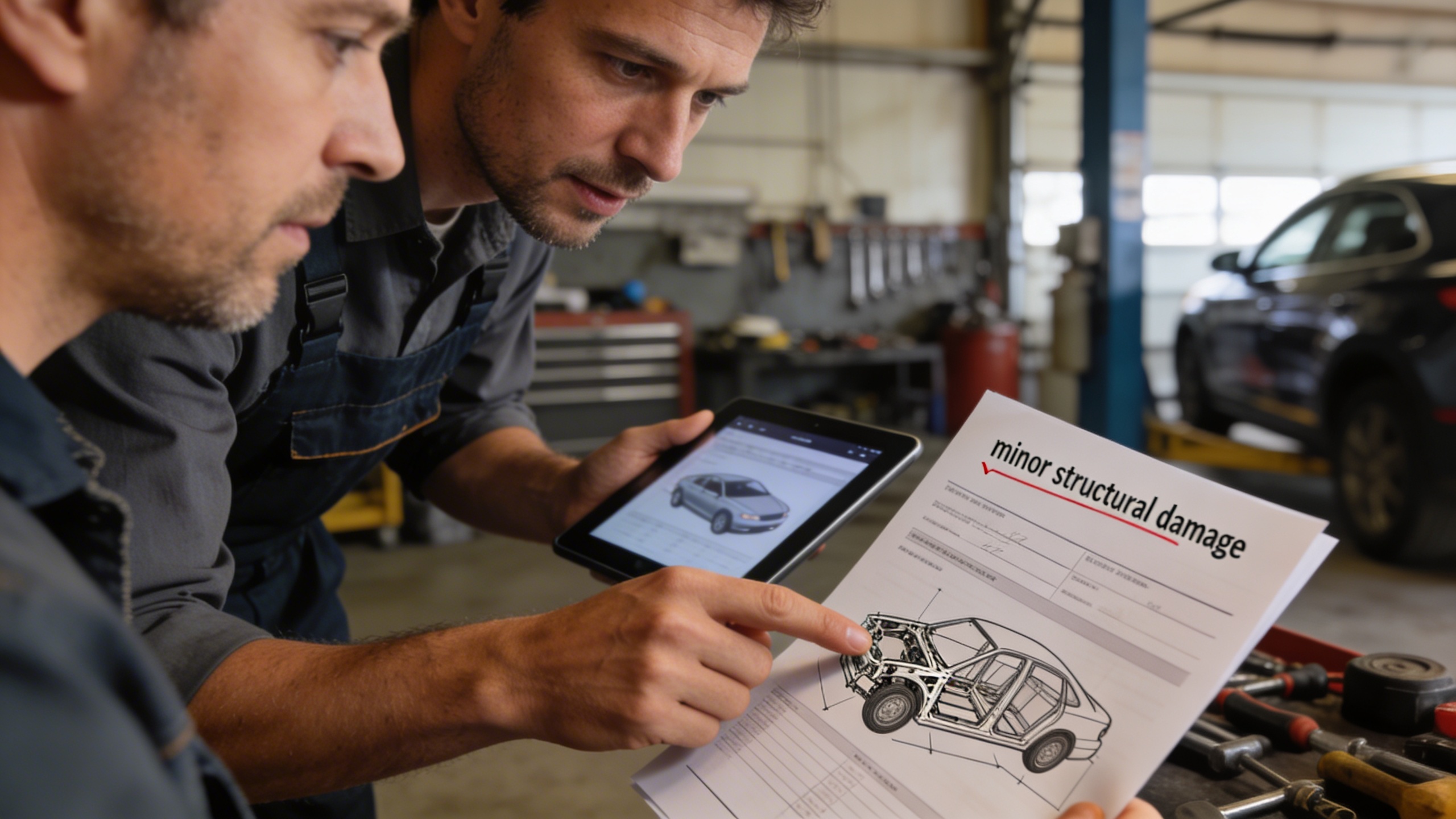
Mechanic explaining 'minor structural damage' notes on a vehicle history report to a buyer, illustrating how dealers buy cars and evaluate accident severity

Accidents and Damage

Read Between Every Line

Accident sections are notorious for soft language. "Minor" doesn't mean minor to your wallet. Carfax sometimes notes "structural damage" if a body shop flagged it; AutoCheck may roll severity on a 0–5 scale. Anything north of 3? Bring a mechanic. Multiple accidents? That's compounding risk. Look for airbag deployments; the National Highway Traffic Safety Administration has warned that many airbag-deployed vehicles also hide frame or restraint-system damage.

Here's my mental checklist when I see an accident entry. Date first. Then location (state matters—hail-heavy Colorado and Texas generate lots of pockmarked hoods). Was a police report filed? Any note of towed from scene? Structural comment? Airbags? Then compare that date to the next service visit—did alignment checks or subframe notes pop up shortly after? If the timeline shows a "minor" crash followed by a front-end alignment and control arm replacement, that wasn't cosmetic.

"If you see flood or salvage and you're not emotionally prepared for a project car, stop."

Don't forget to look for clusters. A car with two "fender-benders" in 18 months may have been hard-driven or poorly repaired after the first hit. You'll also notice language like "vehicle involved in rear impact; damage to rear" without severity. That's your cue to ask for photos and repair invoices. Good sellers keep them. Slippery ones don't.

How I Validate Accident Claims

  • Ask for repair photos and parts receipts (OEM vs. aftermarket tells a story).
  • Check panel gaps, overspray, mismatched paint in person; bring a cheap paint meter if you're serious.
  • Run your hand under rocker panels and inside trunk seams—feel for seam sealer lumps or grit.

Odometer: The Silent Deal Breaker

I've seen pristine SUVs with "one owner" badges derail on a single mileage line. Odometer fraud costs U.S. buyers around a billion dollars a year, and not every rollback shows up cleanly on a report. Your job is pattern spotting. Mileage should rise steadily with time. No drops. No time jumps. No late entries that magically "fix" an earlier high reading.

Plot mileage versus service dates. If a car gains only 1,500 miles in 18 months while registered in suburban Dallas, that's odd. If the cluster was replaced, there should be a documented correction. Terminology to watch: "not actual mileage," "exempt" (older vehicles, often pre-2011 depending on state and federal updates), or odometer discrepancy noted by DMV. Any of those require proof to proceed.

Real Example: Deal Killer

2018 sedan, two owners in nine months, 62,000 miles dropping to 57,000 on a late oil change entry, then back to 63,000 at inspection. Title says "not actual mileage." Verdict: Hard pass. No price will make this math work.

When a rollback is suspected, I ask for oil change stickers, emissions test slips, and state inspection logs. Many states archive inspection mileage; Texas, Virginia, and New York are good examples. If mileage at a Texas inspection two years ago was 138,000 and today's odometer reads 96,000—deal over. No cute explanations.

Quick Math for Sanity Checks

  • Average U.S. driving: roughly 12,000–14,000 miles/year. Urban deliveries, more. Weekend convertibles, less.
  • Look for seasonal use: beach towns show spike in summer; cold regions sometimes dip in winter.
  • Fleet or rental history? Higher miles early, then slow. That's normal.
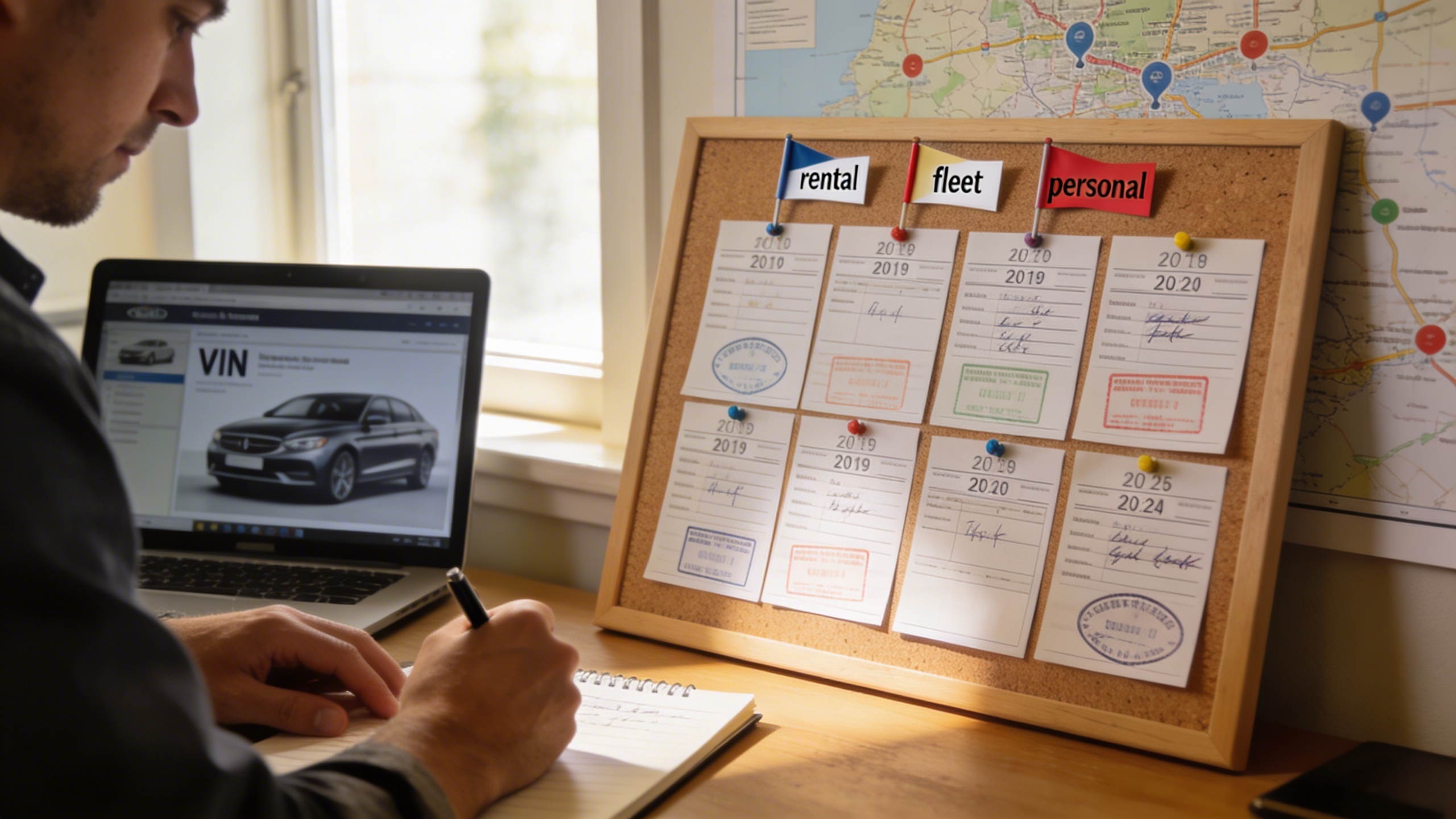
Person mapping ownership stamps and service records on a board to trace vehicle history, showing why wholesale car auctions for consumers require careful review

Ownership, Service, and Regional Factors

Ownership count and timing matter. Three owners in two years is not automatically bad—but it's a story you need to hear. Was it a corporate fleet, then an auction, then a retail buyer? Or was it a problem child bouncing between frustrated owners? The report should list use type: rental, fleet, personal, lease, government. Rentals aren't evil; they're maintained on schedule. But they're also driven by many people who aren't gentle. Would I buy an ex-rental? Sure—if the maintenance is immaculate and the price reflects it.

Service history is your gold. Steady oil changes, brake fluid swaps every two to three years, transmission fluid around 60–90k for many automatics, cooling system attention—those tell you the previous owner respected the machine. Long service gaps are red flags. So are repeated warnings like "customer states overheating" without a documented fix.

Region matters in the USA. Salt-belt states (think Ohio, Michigan, Pennsylvania, upstate New York, New England) chew through underbodies. You'll see more suspension and brake line work, which can be normal. But no rustproofing or undercarriage wash notes after winters? Expect corrosion. The Southeast? Flood and humidity. The Southwest? Sun-blasted dashboards, brittle trim, paint fade. The Mountain West? Gravel chips and windshield cracks. Bake these factors into price negotiations and your inspection checklist.

Step-by-Step: Read the Report Like a Pro

Here's the exact sequence I use when evaluating vehicles for clients and when advising buyers who want to buy auction cars without license through a concierge like VirtualCarHub.com.

  1. Title brands and legal status: Immediate deal killers (flood, salvage) end here unless you're a seasoned rebuilder.
  2. Odometer timeline: Confirm a clean, linear climb. Investigate any gaps or reversals.
  3. Accidents and structural notes: Severity, airbag deployment, towing, parts replaced post-incident.
  4. Ownership count and use type: Personal vs. rental/fleet/lease; too many flips, ask why.
  5. Service regularity: Oil, brakes, coolant, transmission, battery (for EVs—though EV battery data can be sparse).
  6. Region and environment: Salt, storm, heat; compare with visual cues.
  7. Auction events and transfers: Repeated runs signal trouble. Demand receipts.
  8. Recalls and liens: Verify fixes and releases before committing.
"Don't fall in love with any single VIN. Fall in love with your process."

When the Report Looks Clean—but Your Gut Says No

  • Ask for a cold start video: Look for rough idle, warning lights, smoke.
  • Get an independent pre-purchase inspection (PPI): In the USA, $200–$350 is typical and worth every dollar.
  • Compare Carfax versus AutoCheck: They collect from different sources. A "clean" in one and a hit in the other is a red flag by itself.

Real Dealership Results

Let's ground this in outcomes. Buyers who apply this process consistently avoid the traps that drain wallets. They also negotiate better because they're arguing from evidence, not vibes. That's the quiet superpower of reading VHRs well: confidence.

And a quick word to skeptics: a "clean" report doesn't certify perfection. It signals "keep digging." As Edmunds analysts like to say, treat the report as a starting point, not gospel. I agree. I've seen immaculate reports on cars with $20,000 worth of poor structural repair hiding beneath fresh paint.

Last thought. Don't fall in love with any single VIN. Fall in love with your process. The process pays you back, every time—whether you're shopping local, browsing nationwide listings in the USA, or getting help to buy auction cars without license through an access partner. The right car is down the road. Keep your standards. Then go get it.