How to Read a Vehicle History Report

Red Flags to Catch in Carfax and AutoCheck Before You Buy

JULY 2026 EDITION

Read the Paperwork Before the Paint

A Flashlight, Not a Crystal Ball

A vehicle history report is not a crystal ball. It is more like a flashlight in a dark garage: useful, revealing, and occasionally pointed at the wrong corner if you do not know what you are looking for.

Carfax, AutoCheck, NMVTIS tools, and free government lookups can help you spot salvage titles, odometer rollbacks, flood damage, prior fleet use, open recalls, and suspicious ownership patterns. But the trick is reading the report like a skeptical buyer, not like someone trying to justify a shiny car they already fell in love with.

And yes, that happens constantly. A clean dashboard, fresh tires, and that lemon-scented detail spray can make a buyer ignore the one line that matters: structural damage reported. Slow down. Read the paperwork before you read the paint.

"Slow down. Read the paperwork before you read the paint."

Across the USA, used car fraud has become harder to catch because sellers, auctions, lenders, insurers, and state agencies do not all report data at the same speed. A car can look clean on Tuesday and show a branded title two weeks later. That lag is where bad deals are born.

For buyers, dealers, software teams, and AI Business Consulting and Software Development professionals building automotive tools, the lesson is the same: never trust one data point. A strong decision comes from matching the VIN, title trail, mileage sequence, service records, auction notes, photos, recall status, and inspection results.

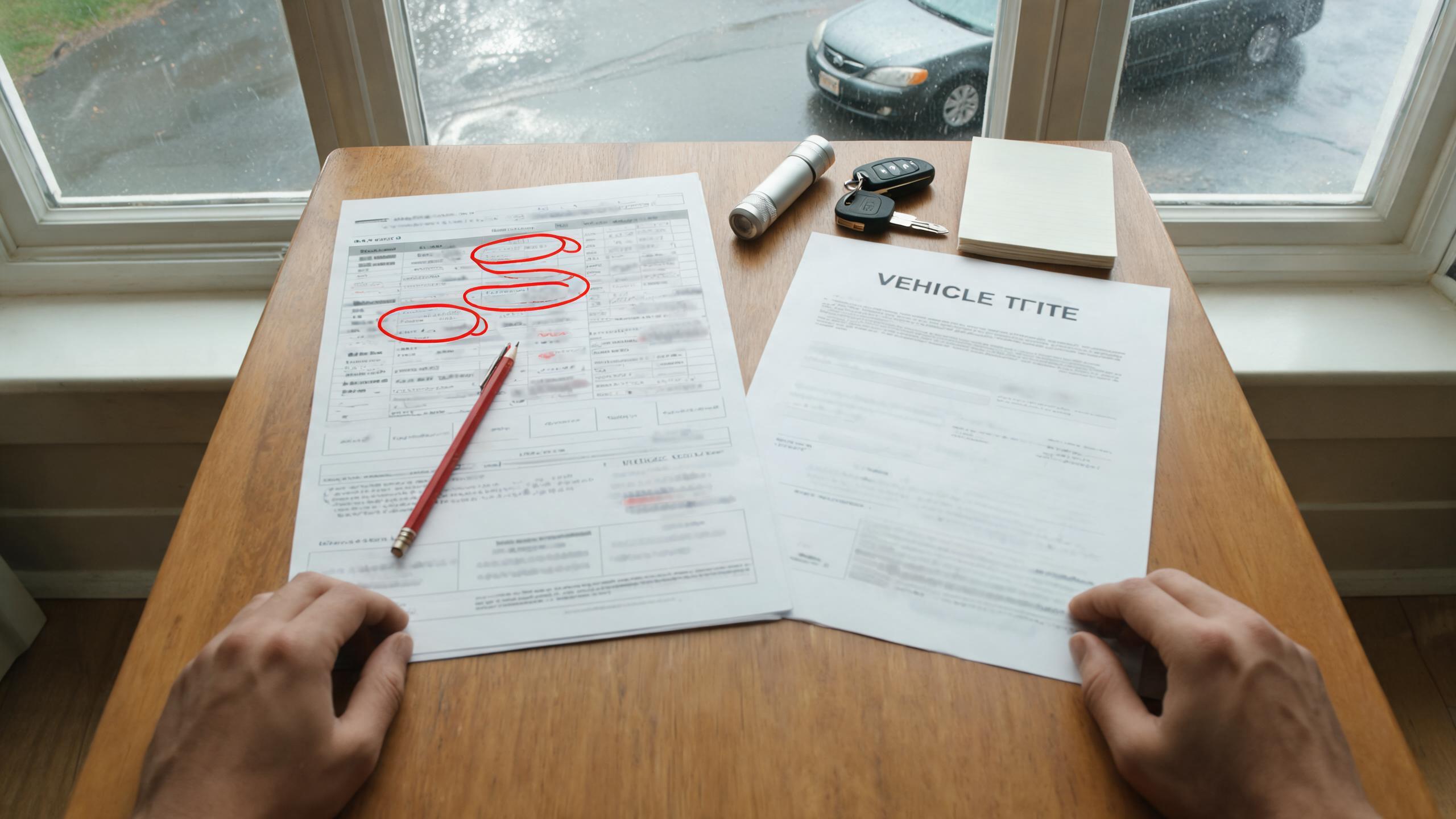
Buyer reviewing title-brand red flags on a vehicle history report before considering used cars without dealer add ons.

Start With the VIN

Read the Report Backward

Begin with the 17-character VIN. Not the plate number. Not a screenshot from a seller. The actual VIN from the dashboard plate, driver door jamb, title, and insurance card if available. Those four locations should match exactly. If one digit is different, stop the deal until you know why.

Run the VIN through at least two sources. Carfax and AutoCheck pull from different networks, and neither one catches everything. Add NHTSA recall lookup and the National Motor Vehicle Title Information System when possible. If you are looking at car auction access for buyers in USA markets, this cross-check matters even more because auction vehicles often move fast and may carry thin descriptions.

Here is my preferred order. First, confirm the VIN and model details. Second, scan the title section. Third, check mileage records from oldest to newest. Fourth, study accident and damage entries. Fifth, review service history and ownership patterns. Then, after all that, look at the nice extras like personal use, lease use, or original owner claims.

Reading backward can help too. Start with the most recent title and registration event, then work toward the first sale. Why? Because many ugly surprises happen near the end of a vehicle life cycle: repossession, auction sale, insurance loss, flood exposure, or rapid state-to-state transfer.

"A clean report is not proof of a clean car."

Watch for timing gaps. A car serviced every 6,000 miles for five years and then silent for 18 months deserves scrutiny. Maybe the owner moved. Maybe the shop stopped reporting. Or maybe the car sat in a body shop after a crash and came back with a polished hood and a story that feels a little too tidy.

Step-by-Step VIN Check Routine

  1. Photograph the VIN from the windshield and door jamb before you pay for any report.
  2. Compare the VIN against the seller listing, title, bill of sale, and report.
  3. Run Carfax or AutoCheck, then verify recalls through NHTSA.
  4. Check whether the trim, engine, body style, and year match the actual car.
  5. Save a PDF copy of every report. If a dispute happens later, screenshots vanish at the worst possible time.

A clean report is not proof of a clean car. It only means the available databases did not show a problem at the time you checked.

Title Brands & Flood Marks

Red Flags That Should Make You Pause

The title section is where the report either starts building trust or starts coughing smoke. Look for terms such as salvage, rebuilt, flood, fire, lemon, junk, not actual mileage, manufacturer buyback, or total loss. Any one of those labels changes the value of the vehicle, sometimes by thousands of dollars.

Salvage does not always mean the car is unsafe today. Plenty of rebuilt vehicles drive around without drama. But you should price them differently, inspect them harder, and insure them carefully because lenders and carriers may treat branded vehicles differently. A rebuilt title Toyota Camry is not the same product as a clean-title Camry, no matter how convincing the seller sounds.

Flood history deserves special suspicion. Water gets into wiring harnesses, seat modules, airbag connectors, amplifiers, carpets, and control units. Then it waits. Six months later, a window switch dies. A year later, the dash lights up like a cheap Christmas tree. In coastal states, hurricane-prone regions, and low-lying areas of the USA, flood cars can travel hundreds of miles before being resold.

"Water gets into wiring, then waits. Six months later, a window switch dies."

Title washing is trickier. It happens when a vehicle with a branded title moves through states with weaker reporting or slower processing and reappears with cleaner paperwork. Texas, Florida, California, Georgia, Arizona, Nevada, and New Mexico often come up in buyer conversations because of volume, weather events, cross-state traffic, or reporting quirks. Do not panic just because a car passed through those states. Do ask better questions.

Multiple title transfers in a short period can mean a dealer-to-auction-to-dealer chain. Normal enough. But if a vehicle jumps states three times in 60 days after an accident, that is not normal retail behavior. It smells like someone is trying to outrun the paper trail.

Red Flags in the Title Section

  • Salvage, rebuilt, flood, fire, junk, or lemon branding.
  • Total loss reported by an insurer, even if the current title looks clean.
  • Title issued in one state shortly after damage was reported in another.
  • Ownership changes every few weeks with no clear retail sale.
  • Not actual mileage or exceeds mechanical limits on older vehicles.

If you see one serious title red flag, do not negotiate first. Investigate first. A lower price does not fix hidden corrosion, missing airbags, sloppy welds, or an insurer that refuses proper coverage.

Think Like a Dealer

What Buyers Can Learn From Auction Thinking

Retail buyers usually shop emotionally. Dealers shop with a spreadsheet in one hand and a flashlight in the other. Understanding how dealers buy cars can make you a sharper private buyer, especially when browsing listings that came from Manheim, ADESA, local wholesale lanes, rental fleets, repossession channels, or online auction platforms.

A dealer does not ask, Do I like this car? The better question is, What is my downside if the report is incomplete? That mindset helps you avoid expensive mistakes. If a report shows moderate front-end damage, three owners, two auction appearances, and no service records for 30,000 miles, the car might still run fine. But the risk stack is getting tall.

Look at auction announcements if they are available. Phrases such as frame damage, unibody damage, true miles unknown, previous Canadian, TMU, AS-IS, arbitration unavailable, or structural disclosure should slow you down immediately. Auction language can be blunt, abbreviated, and easy to miss. Read every line.

"Automation catches patterns. Judgment catches nonsense."

This is where modern software can help. At VirtualCarHub.com, the practical challenge is not simply pulling vehicle data through APIs; it is turning messy records into buyer-friendly warnings. AI models can flag mileage drops, duplicate VIN records, suspicious state transfers, and accident-title mismatches, but a human still needs to confirm the context. Automation catches patterns. Judgment catches nonsense.

For AI Business Consulting and Software Development teams building tools in this space, treat vehicle history like financial risk scoring. Normalize VIN data, timestamp every source, preserve raw records, and show confidence levels. Do not hide uncertainty behind a pretty green badge. If the model is unsure, say so plainly.

A Dealer-Style Report Review Checklist

  1. Estimate wholesale value before falling in love with the retail price.
  2. Deduct for accidents, title brands, mileage gaps, missing service records, and auction announcements.
  3. Compare the report against photos. Overspray, uneven panel gaps, cloudy headlights, and mismatched tires tell their own story.
  4. Ask whether the seller has inspection reports, repair invoices, or pre-sale condition photos.
  5. Walk away if the answer keeps changing. Confusion is one thing. Evasion is another.

Car auction access for buyers in USA searches often lead people to platforms that promise wholesale pricing. That can be useful, but wholesale cars are cheaper for a reason. The consumer protection cushion is thinner, and the paperwork matters more.

Add-Ons, Paint Tricks & Original Owner Claims

History reports do not show everything the seller has done to make a car look better this week. Dealer add-ons, ceramic coatings, nitrogen tires, window etching, GPS recovery devices, and paint protection packages can inflate the out-the-door price while distracting you from the report. If your goal is used cars without dealer add ons, separate the vehicle decision from the finance-office theater.

No paint correction used cars can be especially revealing. I would rather inspect honest swirl marks than a freshly polished black SUV under showroom lights. Heavy paint correction can hide sanding marks, blend lines, oxidation, and minor scratches long enough to make the sale. Bring a paint meter if you are spending serious money, especially on luxury vehicles, trucks, and late-model auction cars.

Original owner used cars wholesale listings sound attractive, and sometimes they are. One owner, consistent service, local registration, and clean mileage progression can be a beautiful combination. But verify the claim. A report may show personal use by one owner, then a quick dealer purchase, then auction sale. Fine. If it shows lease, fleet, rental, corporate, and then personal use, the marketing phrase original owner deserves a raised eyebrow.

Service history is the quiet section buyers skip. Do not. Regular oil changes, brake work, coolant services, transmission fluid records, tire rotations, and recall repairs help you understand how the car was treated. Gaps are not automatic deal killers because many independent shops do not report to Carfax or AutoCheck. Still, no service records plus high mileage plus a vague seller is not a charming mystery. It is risk.

Accident language needs careful reading. Damage reported is not always the same as accident reported. Minor damage to the rear bumper is different from structural damage with airbag deployment. Airbag deployment should trigger an inspection of the restraint system, crash sensors, seatbelts, steering wheel, and dashboard. Do not accept a seller saying, It was just cosmetic, if the report says airbags deployed.

Common Report Phrases and What They Usually Mean

  • Minor damage: often cosmetic, but still inspect panel alignment and paint depth.
  • Moderate damage: repairs may involve multiple panels, suspension parts, or cooling components.
  • Structural damage: serious warning. Get a frame or unibody inspection before even discussing price.
  • Airbag deployed: confirm proper replacement with receipts and diagnostic scan results.
  • Vehicle serviced: useful, but vague. Ask what was serviced.
  • Manufacturer recommended maintenance performed: better. Still request invoices if available.

Mileage is the easiest section to check and the easiest to ignore. Read every odometer entry in sequence. A vehicle with 62,110 miles in March and 48,900 miles in August has a problem unless someone entered the number incorrectly. Mistakes happen. Fraud happens too.

Federal odometer law, including 49 U.S.C. § 32705, requires accurate mileage disclosure in qualifying transfers, and violations can carry serious penalties. In plain buyer terms: mileage is not a casual detail. It affects safety, warranty coverage, resale value, and maintenance timing.

Your Final Decision

A vehicle history report should never be the final word. It should decide what you inspect next. If the report shows front damage, inspect the radiator support, bumper reinforcement, headlights, hood bolts, fender seams, and crash sensors. If it shows flood history, pull the floor mats, smell the cabin, check seat tracks for rust, and scan every module.

Pay for a pre-purchase inspection. I know, nobody likes adding another $150 to $300 after already paying for a report. Do it anyway. A good technician can see fresh undercoating, bent pinch welds, cheap aftermarket panels, oil leaks, tire feathering, and diagnostic codes that never appear in a history database.

"Some deals are not deals. They are delayed invoices."

Use the report for negotiation only after you understand the risk. A minor accident from five years ago with documented repairs may justify a modest discount. A washed title, odometer inconsistency, or undisclosed total loss should usually end the conversation. Some deals are not deals. They are delayed invoices.

Regional context matters across the USA. In the Northeast, corrosion can be the silent killer. In the Gulf Coast, flood exposure deserves extra attention. In the Mountain West, hail damage may show up as cosmetic history. In California, emissions readiness and title documentation deserve a closer look. Same report, different local risks.

If you are building automotive decision software, do not bury those regional risks. Good AI workflows should enrich history reports with weather events, auction lanes, state title rules, recall data, repair-cost benchmarks, and inspection findings. VirtualCarHub.com views this as a trust problem as much as a data problem: buyers need warnings they can act on, not dashboards that look impressive and explain nothing.

Quick Troubleshooting: When the Report Feels Wrong

  • The seller says clean title, but the report says total loss: ask for the current title and insurer documentation. If they stall, leave.
  • The mileage drops once: verify with service invoices, emissions records, and inspection stickers where available.
  • The accident has no details: order another report and get a body shop inspection.
  • The report is completely empty: be careful with very new imports, fresh auction vehicles, and cars recently moved between states.
  • The seller refuses to share the VIN: no VIN, no visit. Simple.

The best buyers are not paranoid. They are methodical. They know that a clean report can miss damage, a scary report can sometimes be explainable, and the truth usually appears when paperwork, inspection, and seller behavior all point in the same direction.

So before you buy, print the report or keep it open on your phone. Mark every title event, every mileage reading, every owner change, every damage note. Ask awkward questions. The person selling a good car will usually respect the homework. The person hiding a bad one will hate it.