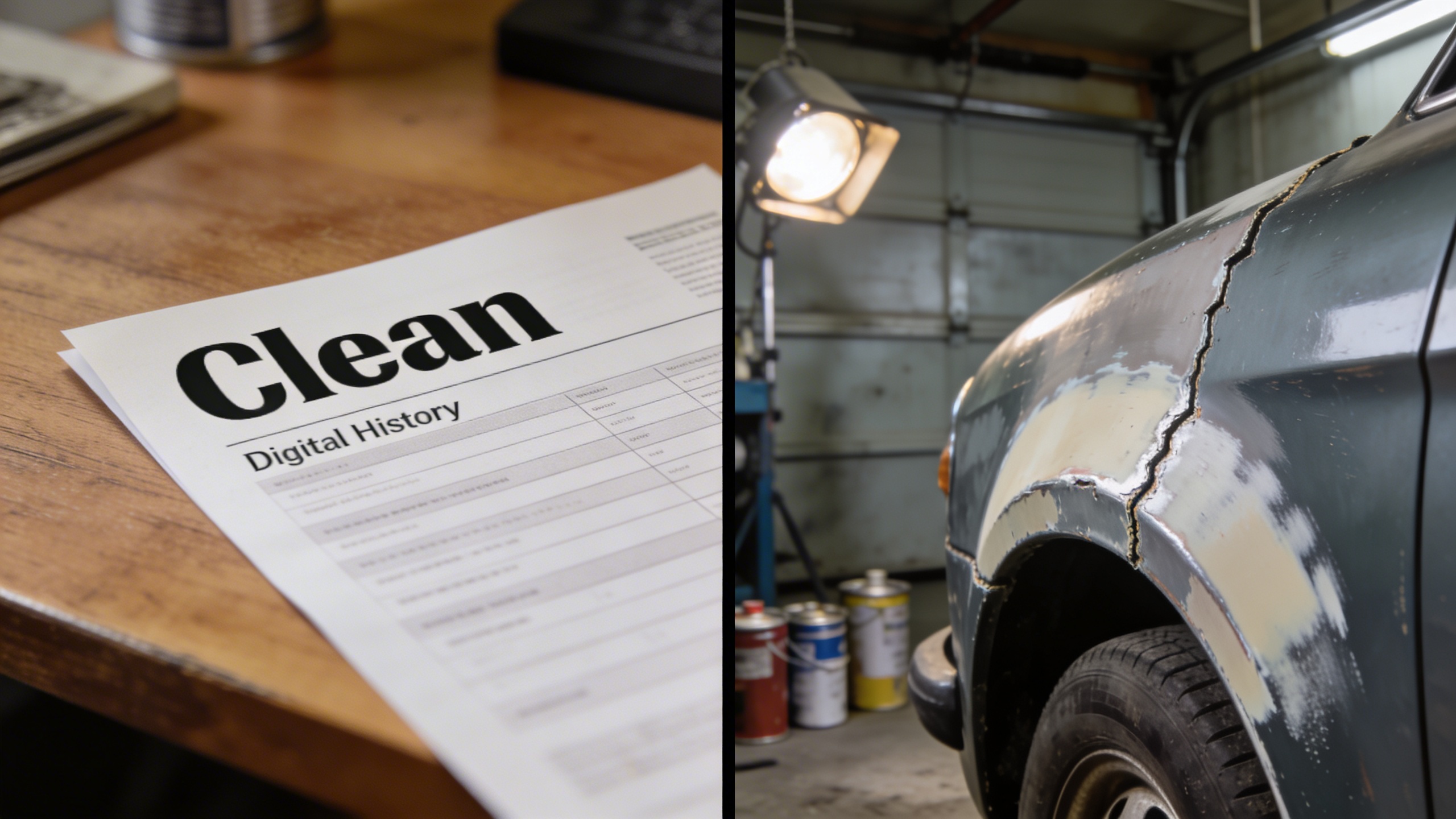
What a Clean Report Doesn't Mean
A clean report is useful. It's not a permission slip. Plenty of repairs never make it into Carfax or AutoCheck because the work was paid in cash, handled by a small body shop, or done in somebody's garage over a long weekend. I've inspected cars with immaculate histories and fresh overspray on the weather stripping. The report didn't lie. It just didn't know. That's a huge difference, and buyers forget it all the time.
Pair the report with your eyes before you pay
So pair the report with basic physical checks. You don't need a lift and a paint booth to catch a lot. Open the hood and trunk. Look for mismatched bolts, uneven seam sealer, crumpled inner fenders, fresh undercoating in isolated patches, cloudy headlights on one side only, or tires with wildly different date codes. On a test drive, release the wheel briefly on a flat road, listen for wind noise around replaced doors, and watch whether the steering sits centered.
- Panel gaps that widen on one side.
- Paint texture that changes from door to fender.
- Rust on suspension, brake lines, and pinch welds.
- Damp carpet, musty odor, or silt in the spare-tire well.
- Warning lights that briefly disappear after a reset.
- Glass dates that don't match around one corner of the car.
"Green light: consistent mileage, clean title, believable use history"
My rule is simple. Green light: consistent mileage, clean title, believable use history, service entries that line up with age, and no severe damage language. Yellow light: minor accident with documentation, one or two missing years, or a former fleet vehicle priced accordingly. Red light: salvage, rebuilt, flood, structural damage, odometer problems, or a timeline that gets weird right before sale. When the report lands in red, don't negotiate with yourself. Just leave it.
There are exceptions, sure. A well-repaired hail car in Arizona can be a smart buy if the price reflects the branded history and your insurer is fine with it. A minor rear-end hit on a ten-year-old commuter isn't automatically fatal. But you need proof—repair invoices, clear alignment readings, and an inspection from someone who doesn't care whether you buy the car. That's the part people skip because they want closure. Bad idea.
Across the USA, the best used-car buyers treat the vehicle history report as a filter, not a finish line. Read it slowly, check the sequence, question the gaps, and verify anything that feels even slightly off. If you're shopping through VirtualCarHub.com or any other marketplace, that habit will save you money, time, and a whole lot of regret. And if the timeline feels odd, assume there's a reason. Go find it—or walk.