Car Title Transfer Guide

A First-Time Buyer's Complete USA Guide to Paperwork, Pitfalls, and Smooth Ownership

ESSENTIAL GUIDE 2025

The Complete USA Paperwork Process

First-Time Car Buyer's Reality Check

You bought the car. Now comes the part too many first-time buyers underestimate: transferring the title cleanly, quickly, and without expensive mistakes. I've walked friends, family, and more than a few panicked readers through this dance across multiple states. You can do it—if you follow a method and watch for traps. This tutorial lays out the exact steps, the forms, the fees, and the gotchas, specifically for the USA market. I'll sprinkle in hard-won tricks and a few cautionary tales to keep you out of the DMV penalty box.

Before we dive in, a blunt truth: paperwork errors are common and costly. The FTC tallied billions in losses tied to title and identity shenanigans in recent years. Odometer slip-ups? Federal issue. Missed lien? That can haunt your registration and insurance. Take a beat, gather the right documents, and let's do this—start to finish—like a pro.

"Paperwork errors are common and costly. The FTC tallied billions in losses tied to title and identity shenanigans."

If you're buying fully online—with car delivery to home in USA growing fast—the title still has to be right. Even when a platform or dealer promises to "handle everything," verify. Trust, then verify. And keep copies of everything, digital and paper. Belt and suspenders.

Why Title Transfer Matters More Than You Think

The car title transfer process isn't just bureaucratic busy work—it's your legal proof of ownership and protection against fraud. In the USA car title system, each state has specific requirements, but the fundamentals remain consistent. Getting it wrong can cost you thousands and leave you legally vulnerable.

First-time buyer reviewing NMVTIS and vehicle history report at home to avoid fraud and hidden fees

The 8-Stage Title Transfer Playbook

Step-by-Step: Your Complete USA Guide

This is the nuts-and-bolts section. Plan an hour to prep, another hour at the DMV (or a notary), and a few minutes to upload docs if your state supports electronic titling (most do now). I'll call out regional differences where they bite.

1) Verify the Seller's Title (and Lien Status)

Ask for the physical title (or e-title proof), the seller's ID, and any lien release letter. Look for: correct VIN, matching names, and no active lien. Don't accept "the bank is mailing it later" without paperwork. Then run a lien check through NMVTIS—costs the price of a sandwich, saves you from a nightmare. If a lien exists, walk or require a payoff handled at closing with the lender on a three-way call.

Personal tip: snap photos of the title front and back. Zoom in on the assignment section and the odometer block. When something looks off (scribbles, white-out, mismatched ink), it usually is.

Critical Warning Signs

Watch for white-out, mismatched ink, or any corrections on the title. These red flags could indicate fraud or forgery. A legitimate title should be clean and clear with consistent handwriting and ink color throughout all signatures and entries.

2) Complete the Odometer Disclosure—Precisely

For vehicles under 10 model years old, federal law requires an odometer disclosure on the title or on the state-approved form. Fill it in clearly—no decimals, no smiley faces. Both buyer and seller sign. Don't leave it blank. Odometer discrepancies can plug your deal into a federal socket you don't want to touch.

3) Fill Buyer/Seller Assignment—Names, Addresses, and (Sometimes) a Notary

The seller signs where indicated. The buyer prints their legal name and address exactly as it appears on their driver's license. Some states want a notary stamp on the title assignment—don't guess. States like Florida and New York often require notarization; California does in specific scenarios. If in doubt, hit a UPS Store notary or a bank branch. It's a 5-minute stop that can save weeks.

"Names must match IDs. Middle initials matter. If there's a typo, fix it fast; late corrections are always harder."

4) Draft a Bill of Sale (Even If It's "Optional")

Write one page with VIN, year/make/model, sale price, date, parties' info, and signatures. It's mandatory in most states and smart in all of them. Use your state DMV template if available. I add "sold as-is, no liens, odometer disclosed" language. It shuts down later drama.

5) Handle Inspections: Emissions, Safety, and Weird Local Stuff

Some states require emissions or safety inspections before titling. Texas? Yes. New York? Often. Colorado? Emissions in specific counties. Plan $20–$50 and a short wait. If the car fails, fix first, then title. Don't gamble on a temporary tag grace period without reading your state's site line by line.

6) Pay Taxes and Fees without Overpaying

Sales tax is state and sometimes county/city based. Expect roughly 6–10% depending on where the car will be registered. Title fees range from "that's it?" to "I need to sit down." If you paid cash over $10,000, certain dealers file IRS paperwork—private buyers don't, but keep your receipt trail squeaky clean. Bring a printed insurance card or digital proof.

7) Submit to the DMV or County Office—In Person or Online

Gather: title (signed), bill of sale, your ID, proof of insurance, inspection certificate (if required), and payment. Many USA states support Electronic Lien and Title (ELT), which speeds processing. Online portals are getting better—still clunky sometimes, but faster than a paper shuffle. If you moved states recently, bring proof of address like a utility bill.

Pro move: set a calendar reminder to check status in 10 days. If nothing moves, call. DMV agents appreciate prepared callers—have your VIN ready and the submission date on hand.

8) Receive the New Title—and Lock Down Plates/Registration

Titles can arrive by mail in 1–12 weeks depending on state backlog. Some offices issue plates immediately; others hand you temp tags. If you gifted the car or bought from family, file the proper tax exemption forms or affidavits. Keep a digital folder with PDFs of everything—if you sell later, buyers love an organized history.

Quick sanity check: the name on your new title should match your license. Middle initials matter. If there's a typo, fix it fast; late corrections are always harder.

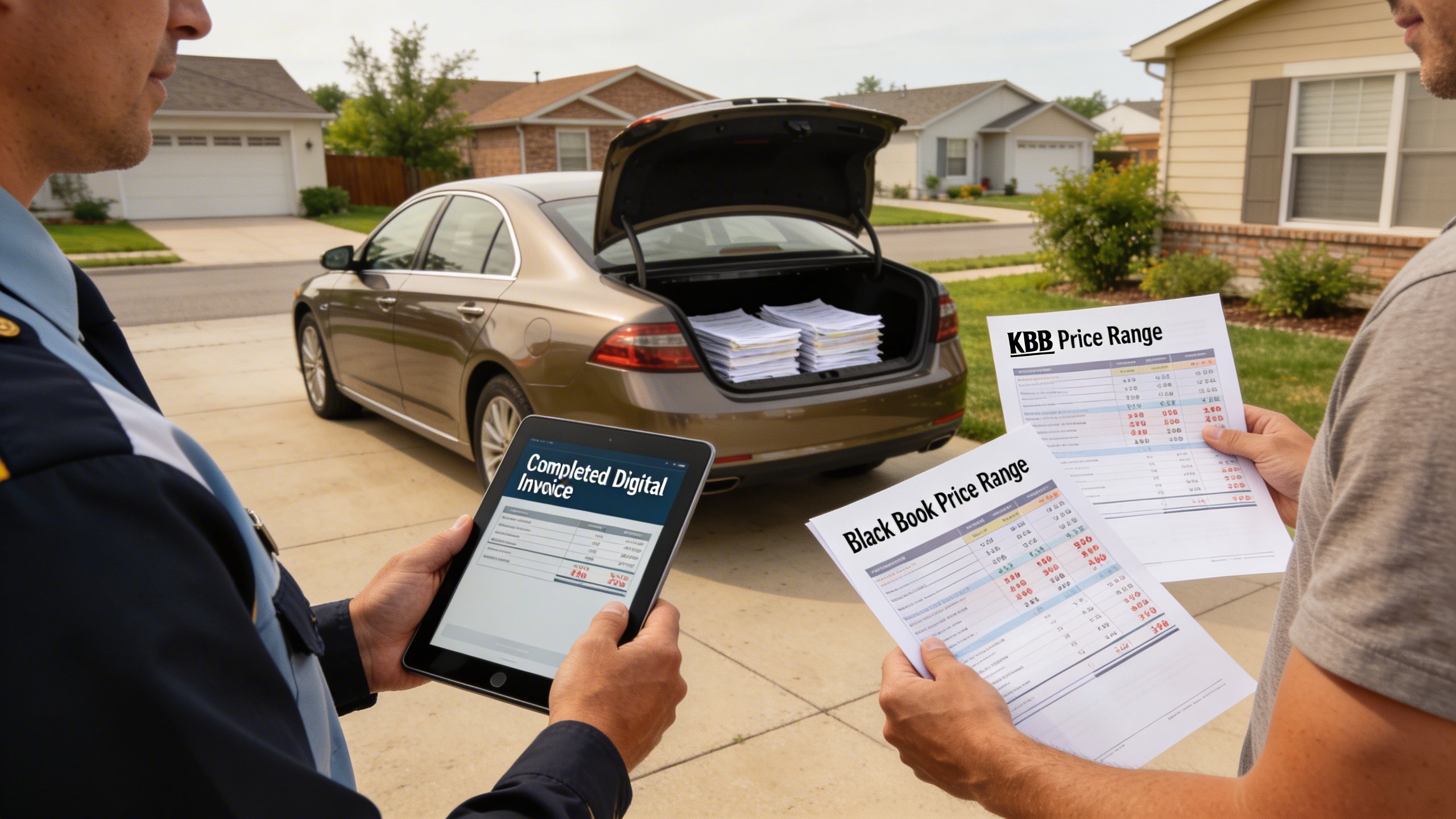
Home delivery handoff with buyer reviewing price comparisons and delivery paperwork, showing how to buy a car without inventory markup

First-Time Buyer Essentials: Avoiding Fraud, Fees, and Headaches

First car? Congrats. Also—deep breath. The USA used-car ecosystem is massive, and most sellers are fine, but scams are louder than ever. Here's how first-timers stay clean.

Pre-Deal Checklist You'll Thank Yourself For

  1. Run NMVTIS and a vehicle history report. Different data sources catch different issues.
  2. FaceTime or in-person walkaround: confirm VIN plates (dash, door jamb), check title name matches the seller's ID.
  3. Confirm lien release in writing if a lender's involved.
  4. Ask for maintenance records. Oil change receipts beat "my cousin's a mechanic."
  5. Test-drive with the radio off. Listen for knocks, whines, and brake chatter.

And yes, photograph everything. You're building a trail of competence in case someone questions the deal later. Insurance adjusters and DMV clerks both appreciate evidence.

USA-State Nuances That Trip People Up

  • California: High ELT adoption. Expect e-communication, which is great, but watch name formatting—hyphens and suffixes can cause rejects.
  • Texas: Straightforward process, but inspections and flood disclosures are front and center post-storm seasons along the Gulf. Don't ignore water damage clues.
  • Florida: Notary rules and tax on gifts catch folks. Use state gift affidavits if transferring within family.
  • New York: Emissions, safety, and longer mail times. Book an appointment early; walk-ins can mean multi-hour waits.
"Trust, then verify. And keep copies of everything, digital and paper. Belt and suspenders."

Where People Blow It (Don't Do These)

  • Leaving odometer blank "to fill later." That's how delays—and investigations—start.
  • Misreading seller signature spots. If the seller signs the buyer line, you need a notarized correction or a duplicate title. Ugly.
  • Paying full price before lien payoff is documented. If there's a lender, coordinate the payoff at a bank branch with cashier's checks, or use an escrow service.
  • Forgetting local taxes when crossing state lines. Your registration state sets the tax, not the seller's.

One more: names must match IDs. If you recently changed your name, bring the court order or marriage certificate. Clerks are sticklers—and they should be.

Real-World Lessons and What's Next

Used cars are a gigantic USA market—tens of millions of transactions a year—so even a small error rate becomes a tidal wave of headaches. Title fraud, VIN cloning, and odometer games all grabbed headlines in the past couple of years, and first-time buyers are often the softest targets. The fix isn't paranoia. It's process.

Quick Reference: Your Transfer Checklist

  1. Seller's title verified; lien release in hand
  2. Odometer disclosure completed and signed
  3. Bill of sale prepared, signed, and copied
  4. Inspection passed (if required)
  5. Proof of insurance and ID ready
  6. Taxes/fees calculated; payment method set
  7. DMV submission (online or in-person) scheduled
  8. Status tracked; plates and registration confirmed

One last nudge: if you're leaning into skip the dealership car buying, consider a concierge partner for the boring bits. Even if you DIY, borrow their frameworks—templates, checklists, status trackers. The best approach is to steal the format and save the stress.