How to Transfer a Car Title

Practical Guide to the Paperwork Process + First-Time Car Buyer's Complete Guide

2025 ESSENTIAL GUIDE

What a Car Title Really Is

Why First-Timers Should Care

Buy the right car, bungle the title, and you've just purchased a headache with wheels. I've watched bright-eyed buyers in the parking lot—keys in hand, grin wide—then wilt at the DMV window when the clerk says, "We can't process this." The fix isn't mysterious. It's paperwork, sequence, and a little stubborn attention to detail.

The title isn't a receipt. It's ownership. It tracks liens, brands (salvage, rebuilt, flood), and mileage statements that follow the car like a permanent shadow. In 2025, new vehicle sales in the USA jumped to roughly 16.1 million. First-time buyers accounted for 28% of that shift, and the used market moved about 41 million cars. Where do deals go sideways? Paperwork. Car title transfer mistakes delayed an estimated 15% of used sales—fees piled up, temp tags expired, tempers flared.

"Title transfer is the make-or-break step for first-time buyers—skip the notary or lien release, and you're stuck with a lemon you can't resell."

If you're buying or selling in the USA, the state DMV rules are the rules—there's no national title. Some states want a smog certificate; others demand a VIN inspection; many require notarized signatures. Skip a step and your shiny purchase becomes a driveway statue. It doesn't have to be this way; you'll see how to do it cleanly in a minute.

Here's the mental model: prove the car's identity, prove the seller's right to sell, prove the mileage, clear the lien, and pay the taxes and fees within the state's clock. Do those five, in that order, and you sail through. Miss one, and you wait—sometimes weeks. I've learned to get slightly annoying before I hand over money. It works.
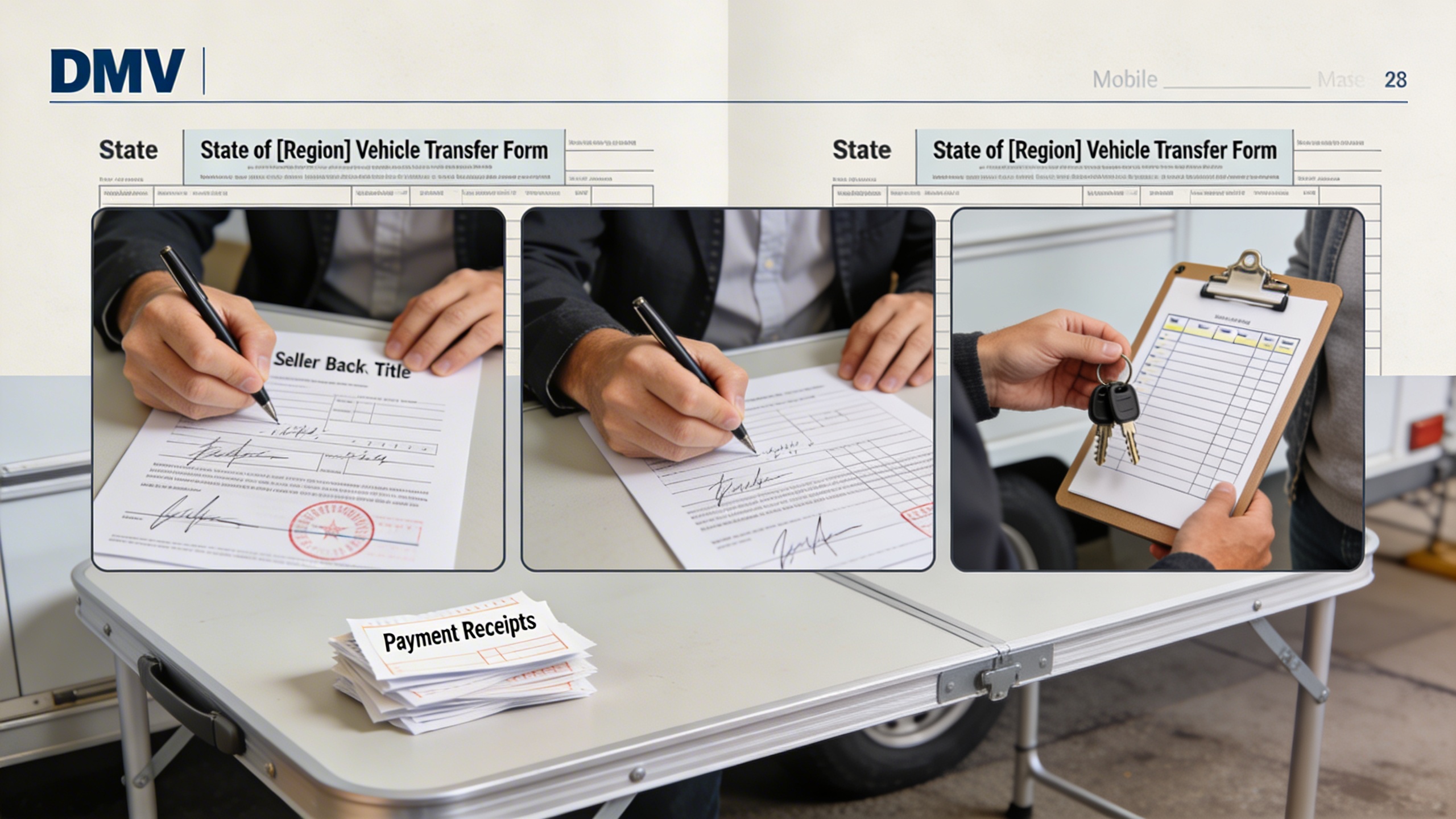
Three-step visual sequence of signing and exchanging title paperwork and keys, a clear guide to transfer a car title and the paperwork process

Step-by-Step Transfer Process

The Complete Walkthrough

Let's walk the exact path, no fluff. I'll flag the traps that trip up new buyers and share workarounds that have saved me and my readers time, cash, and grief. State specifics vary, but the bones are the same in all fifty.

Before daydreaming about your first highway run, sanity-check the car. I mean the VIN, the title status, and any claims lurking behind a friendly price. Flood states spike after storms. Rust states bring hidden undercarriage problems. With titles, locality matters more than you think.

Essential Pre-Transfer Inspection

Run the VIN at NICB.org (free). Buy a CARFAX or similar report for about $40. If the car's traveled through hurricane alley or shows auction notations, slow down. Reports catch a lot—roughly four out of five ugly surprises—but not everything.

You're aiming to finish inside your state's transfer window (often 10–30 days). Miss it and penalties can reach hundreds. In Texas, I've seen buyers hit with late fees and a second trip because the notary stamp was smudged. In New York, paper titles can crawl for three weeks; the e-title app cuts that dramatically. Small details, big outcomes.

  1. Pre-Transfer Inspection (5–30 minutes): Run the VIN at NICB.org (free). Buy a CARFAX or similar report for about $40. Cross-check photos, service records, and the physical VIN plate on the dash and door jamb.
  2. Confirm the Seller and Lien Status (10–30 minutes): The name on the title must match the seller's ID. If a lender is listed, you need a lien release letter or payoff letter on lender letterhead. No exceptions.
  3. Gather Paperwork (same day): Signed title, bill of sale with price/date/VIN, government ID, odometer disclosure, smog certificate where required, and any state-specific forms.
  4. Calculate Taxes and Fees (15 minutes): Sales tax ranges roughly 4–10% depending on state and locality. Use the state DMV's online calculator.
  5. Submit to the DMV (1–21 days): Options include in-person, mail, or online—28 states support some version of e-title or online transfer.
  6. Post-Transfer To-Dos (same day to 1 week): Update insurance immediately—don't drive uninsured. Register plates or transfer existing ones per state rules.
"California processed about 2.2 million title transfers last year and moves fast once docs are clean."

Troubleshooting the DMV Counter

I carry a simple checklist on my phone. At the window, I hand over a neat stack: title (signed), bill of sale, odometer, smog/VIN inspection if required, lien release, proof of insurance, and the fee estimate. Any mismatch? I address it right there. If a clerk rejects a signature because of a stray initial (it happens), I call the seller while I'm still at the counter.

  • Smog snafu in California? Ask for the seller's smog within the required window or walk. A missing cert can hide a costly repair and even unpaid fines.
  • Odometer confusion? Federal law wants a clean reading on transfer. If the cluster was replaced, bring the repair record and mark "exempt" only where the state allows it.
  • Out-of-state title? Budget for a VIN inspection—35 states require one. It's quick, but you'll need the car physically present.

Fraud Red Flags You Can Spot in Five Minutes

Water damage smell (musty, sweet, or chemical). Mismatched screws around the dash VIN plate. Fresh undercarriage paint that hides rust. A seller pushing a cash-only deal, fast. Title brands differ by state, but flood and salvage marks should scream caution. If a Texas truck lived through the 2025 storms, demand the flood disclosure form. If the seller shrugs—no deal.

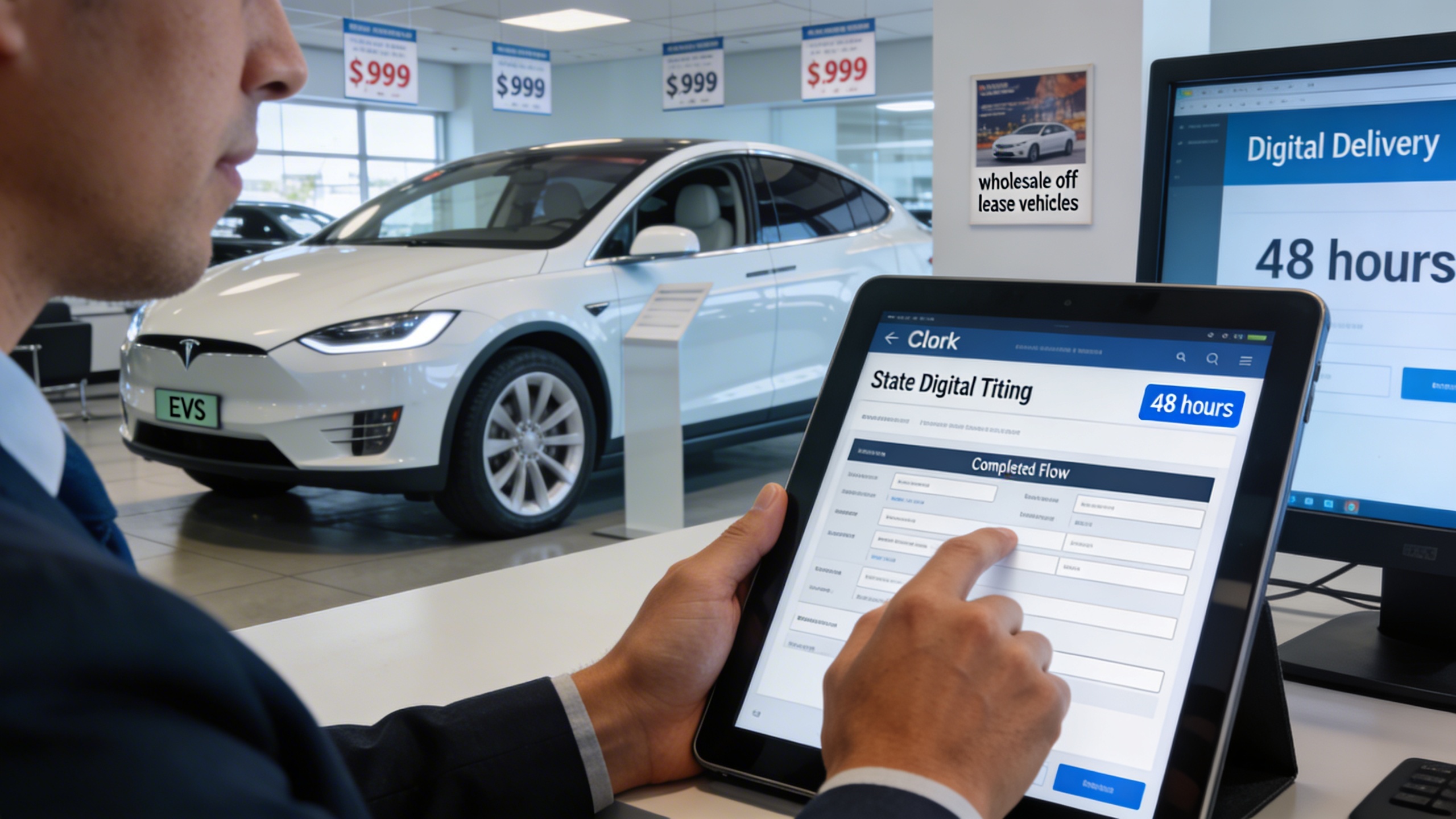
Dealership staff completing an electronic title transfer on a tablet with a showroom EV nearby, illustrating digital titling and off lease vehicles wholesale

First-Time Buyer Playbook

Skip the Dealership Drama

First purchase? Congrats. Now exhale and plan backwards from total cost, not monthly payment. Inflation nudged fees up—title and registration alone climbed about 9% nationwide—so pad your budget. Aim for 10% down if you're financing. Pre-qualify with your bank or credit union (I see APRs hovering around the upper single digits lately), and bring that number to any negotiation.

Yes, you can skip the sales floor completely. Many reputable platforms handle digital paperwork, arrange financing, and offer car delivery to home in the USA. Done right, it saves a Saturday and the back-and-forth over floor mats. I've used delivery twice; both times I set one non-negotiable: I inspect and drive the car on arrival before I sign final documents.

Digital Car Buying Process

VirtualCarHub.com walks buyers through identity checks, digital signatures, and secure payment holding until the title package is verified. Their reps nudge sellers for lien releases before a truck rolls, which spares you that DMV line where your "new" car becomes a week-long problem.

How Car Pricing Really Works

Think of pricing as layered: the car's wholesale value, retail markup, add-on fees, and timing. Off-lease vehicles at wholesale auctions often set the heartbeat of used prices. When a wave of 36-month leases ends, the market floods with similar trim levels and mileage—prices soften a bit.

  • Wholesale vs. retail: Dealers buy at or just above wholesale, then add recon (tires, brakes, detail), overhead, and margin.
  • Seasonality: Convertibles dip when snow hits, 4x4 trucks rise. Tax refund season bumps prices.
  • Fees and taxes: Roll every cost into your out-the-door calculation—DMV fees, title, registration, and sales tax.
"Cars are not rare; your patience is."

Delivery Day Checklist

  • Cold start the engine. Listen for ticks. Scan for warning lights.
  • Check that VIN on dash and door matches the title, bill of sale, and your insurance card.
  • Test drive on bad pavement and at highway speed. Brakes straight? No shake at 65 mph?
  • Verify the odometer matches the disclosure line. Photograph it for your records.
  • Open the trunk/spare well—musty smell or water lines = walk away.
  • Online delivery? Read every doc before e-signing. If a lien release is "en route," pause the deal.

Real Dealership Results

Digital titling is more than convenience; it's fewer mistakes. I watched a New York buyer use the state's e-title flow for a 2024 EV—documents aligned, no smudged stamps, no return trips. Turnaround: forty-eight hours. Paper would've taken most of a month. Multiply that across a store or platform and you see why the industry is racing online.

There's another angle: disclosure rules tightening after floods in the Gulf states and severe weather in the Southeast. Texas now mandates specific flood disclosures, and Florida buyers have learned (the hard way) to check for hurricane-related salvage branding. The lesson holds everywhere in the USA—match what's on the car to what's on the paper, every time.

When Things Go Wrong

Two stories stick with me. A Los Angeles buyer thought a friendly handshake covered smog and fines—months later, a $4,000 emissions lien surfaced and the DMV voided the whole sale. In Houston, a handsome truck hid flood damage; the "salvage" brand got ignored during transfer, and an insurance claim later collapsed. Both were avoidable.

Quick Reference: The Minimal Paper Stack

  • Signed title with seller and buyer info filled in, exactly as IDs read
  • Bill of sale with VIN, price, date, and both signatures
  • Odometer disclosure line or separate federal form signed
  • Lien release on lender letterhead, or payoff letter with account reference
  • Smog/VIN inspection where applicable
  • Proof of insurance and ID for DMV submission

After You Own It: Keep Future-You Happy

File a neat digital folder: PDFs of the title front/back (after transfer), bill of sale, lien release, inspection receipts, and any warranty transfers. When it's time to resell—or to claim incentives—you'll glide through. It's boring paperwork now, but it turns into real money later.