Hybrid vs. Electric vs. Gas

How to Choose the Right Powertrain for Your Life

Powertrain Buyer's Guide — June 2026

The New American Powertrain Divide

The old car-buying question used to be simple: sedan or SUV, new or used, practical or fun. Now shoppers face a more consequential choice before they ever talk color, trim, or monthly payment: hybrid, electric, or gas?

Across the USA, that decision has become less ideological and more personal. It depends on your driveway, your utility bill, your commute, your patience for charging apps, and whether your weekends involve Costco runs or towing a bass boat across Texas. The market has matured. So has the buyer.

Pure electric vehicles still promise the lowest day-to-day energy cost for the right household. Hybrids have become the sensible middle lane, delivering serious fuel savings without asking owners to reorganize their lives around plugs. Gasoline vehicles, dismissed by some as yesterday's technology, remain stubbornly useful for price-sensitive shoppers, rural drivers, and anyone who values fast refueling above almost everything else.

"There isn't one best powertrain. There's a best powertrain for your use case — and the difference can be thousands of dollars."

In the USA, gasoline vehicles still dominate new-vehicle sales, but the composition underneath that dominance is shifting. Battery-electric vehicles have moved from novelty to mainstream consideration, while hybrids have staged a comeback that caught even some automakers flat-footed. Toyota, Ford, Honda, Hyundai, and Kia have all benefited from shoppers who want lower fuel bills without betting their daily routine on public charging.

Industry sales data in recent years has generally placed EVs in the high-single-digit share of U.S. new light-duty sales, with hybrids growing faster from a larger base in several segments. The exact monthly share moves around with incentives, inventory, fuel prices, and model launches. But the pattern is clear enough: EV demand is real, just uneven. Hybrid demand is broad. Gasoline demand is still massive.

That matters because car ownership isn't lived on a spreadsheet. A California homeowner with rooftop solar and a Level 2 charger in the garage is playing a different game from an apartment renter in Phoenix, a contractor in rural Iowa, or a family in Florida that drives 500 miles for holidays and doesn't want to gamble on charging availability along I-75.

Automakers know this. After several years of aggressive EV forecasts, many manufacturers have softened the timeline and leaned harder into hybrids. They're reading the room. Buyers like electrification when it feels invisible. They become more skeptical when it requires planning, infrastructure, or financial gymnastics.

For used-car shoppers, the decision gets even more interesting. Wholesale car auctions for consumers, online marketplaces, and platforms such as VirtualCarHub.com have made it easier to compare powertrains across regions, mileage bands, and price points. A three-year-old hybrid crossover in Ohio, a used EV in California, and a gasoline pickup in Georgia may each be a smart buy. Context is everything.

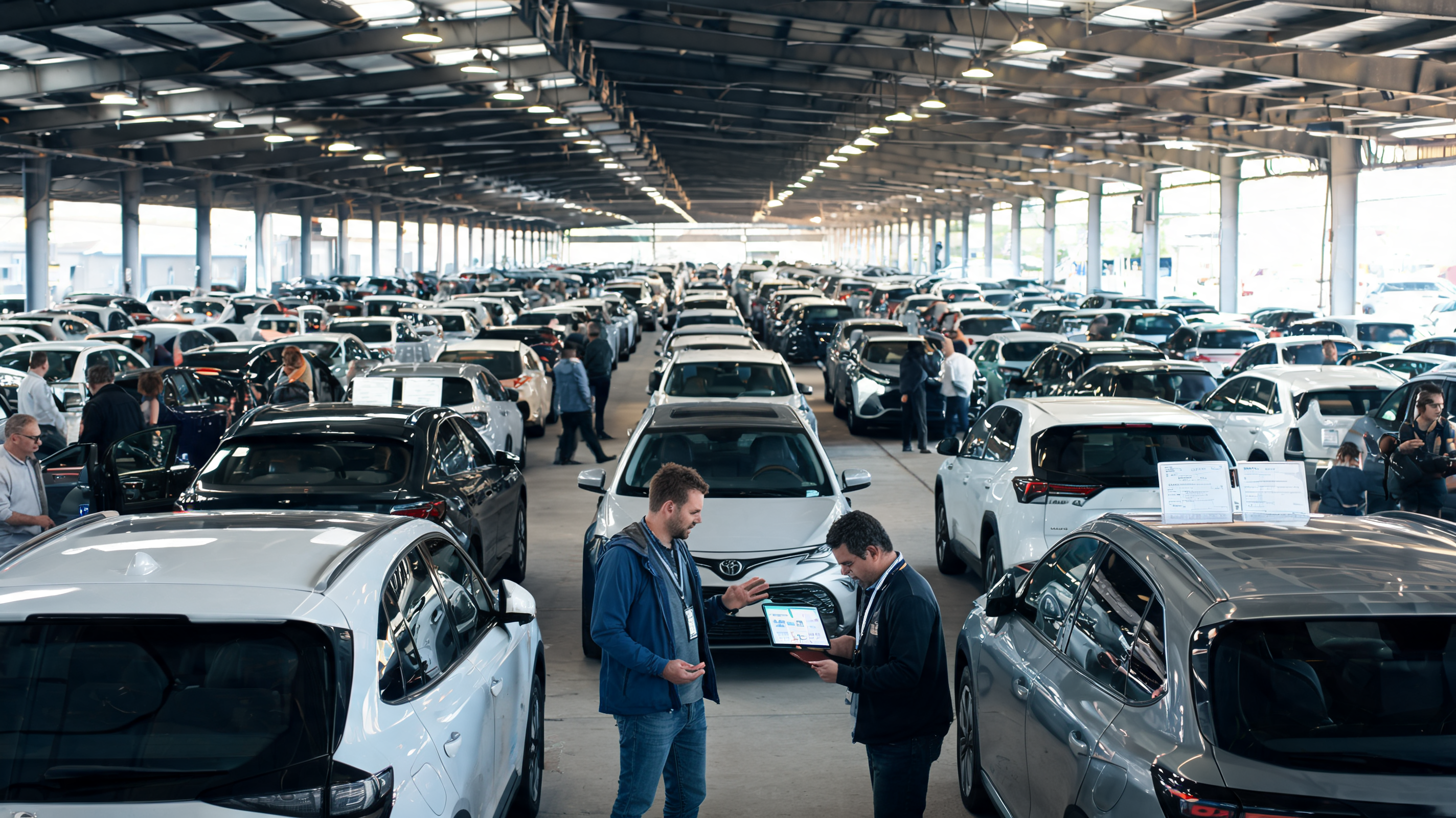
Buyer comparing used EV, hybrid, and gas vehicles at an auction lane with an advisor, showing car auction access for buyers and wholesale car auctions for consumers.

Car Auction Access & Why Used Prices Change the Math

The Used Market Tells the Truth First

The used market often tells the truth before the new-car showroom does. Depreciation, incentives, battery concerns, and fuel-price anxiety all show up quickly in auction lanes and online listings. For buyers searching for the best deals on used cars online, powertrain choice is no longer just about efficiency. It's about resale risk, repair exposure, insurance, and how much convenience you're willing to pay for.

Electric vehicles can be compelling used buys because depreciation has been steep on some models, especially when new EV price cuts and federal tax credit changes reset buyer expectations. A used EV that once seemed expensive may now be priced within reach of a conventional compact SUV. But battery health matters. So does charging access. A cheap EV without home charging can become a daily nuisance with nice upholstery.

Hybrids tend to hold value well because their appeal is broad. They don't require home charging. They improve fuel economy in city driving, where gasoline vehicles waste the most energy. And modern hybrid systems from established manufacturers have earned a reputation for durability, particularly in taxis, rideshare fleets, and high-mileage commuter use.

What Auctions Reveal About Buyer Psychology

Auction behavior is blunt. Dealers and consumers chase vehicles they believe they can live with, finance, insure, and resell. When fuel spikes, hybrids suddenly look golden. When EV incentives change, used electric values can wobble. When interest rates bite, low upfront cost gets attractive again.

That's why car auction access for buyers in the USA has become more relevant to ordinary households. Instead of relying only on retail lots, shoppers can see how wholesale values move and where opportunities appear. Platforms such as VirtualCarHub.com reflect a broader shift in which consumers want auction-level choice, transparent logistics, and car delivery to home rather than the traditional Saturday spent walking asphalt lots.

Regional Pricing Realities

Gas vehicles remain the easiest to evaluate for many shoppers. Mechanics know them. Parts are everywhere. Auction supply is deep. If your goal is to buy auction cars without license complications through a consumer-access platform, gasoline inventory often provides the widest selection and the most predictable inspection process. That doesn't make gas automatically superior. It makes it familiar — and familiarity has economic value.

Used EVs may be more plentiful in California, Washington, Colorado, and parts of the Northeast where adoption has been higher. Hybrids can command premiums in high-gas-price regions. Gas trucks and SUVs may be abundant in Texas, the Southeast, and the Midwest, but clean, low-mileage examples still bring strong money because demand is relentless.

"Buyers like electrification when it feels invisible. They grow skeptical when it requires planning or financial gymnastics."

Electric Vehicles: Brilliant If Your Life Fits the Plug

The Ideal EV Household

An EV can be the smartest powertrain in America for the right household. The ideal profile is almost boring: you own your home, you can install a Level 2 charger, your commute is predictable, and your longest regular drive falls comfortably within the vehicle's real-world range. If that's you, an EV can feel wonderfully low-maintenance. No gas stations. Fewer routine service items. Quiet torque every morning.

Fuel cost is the headline advantage. Charging at home — especially with time-of-use utility rates — can be dramatically cheaper than buying gasoline. In many parts of the USA, overnight electricity rates can reduce per-mile energy costs well below comparable gas vehicles. The gap widens when gasoline prices jump, which they always seem to do at the least convenient moment.

Federal tax credits may also help, though eligibility has become more complicated. Vehicle assembly location, battery component sourcing, income limits, and manufacturer compliance all affect whether a buyer qualifies. Used EVs may qualify for a smaller federal credit under specific price and income rules. Don't assume. Verify before you fall in love with the car.

But let's be candid. Public charging is better than it was, and still not good enough for everyone. Charger reliability varies by network. Fast-charging speeds drop in cold weather, during crowded holiday travel, or when the battery is outside its ideal temperature window. Apartment dwellers face the biggest hurdle. If you don't control where you park at night, EV ownership can feel like borrowing convenience from tomorrow.

Best Fit for EV Buyers

  • Homeowners with reliable Level 2 charging access.
  • Commuters driving predictable daily routes under 150 miles.
  • Urban and suburban drivers in states with dense charging networks.
  • Households using the EV as one of two vehicles, with a gas or hybrid car for long trips.
  • Buyers who can use federal, state, or utility incentives without stretching their budget.

EVs are not fragile science projects anymore. Many are excellent cars. But the ownership experience depends heavily on infrastructure, and infrastructure is uneven. California is not rural Kansas. Seattle is not the Florida Panhandle. Details matter.

Hybrids: The Practical Middle Ground

Hybrids have become the rational default for many mainstream buyers. A conventional hybrid doesn't need to be plugged in. The battery assists the gasoline engine, captures energy during braking, and lets the car operate more efficiently in stop-and-go traffic. The driver does almost nothing differently. That's the magic. No charging plan. No range calculation. No awkward moment at a broken fast charger behind a convenience store at 11 p.m.

Plug-in hybrids complicate the picture in a good way. With 25 to 50 miles of electric range on many models, a plug-in hybrid can cover weekday errands on electricity and still use gasoline for long trips. But only if you actually charge it. Many plug-in hybrids become overpriced regular hybrids when owners don't plug in consistently. Human behavior ruins plenty of elegant engineering.

Reliability is another reason hybrids have surged. Fleet operators noticed this years ago. Taxi companies, municipal fleets, and rideshare drivers often gravitated toward hybrids because fuel savings were real and downtime stayed manageable. That's not a romantic endorsement, but it's a useful one. Fleets are allergic to nonsense.

Best Fit for Hybrid Buyers

  • Drivers with long commutes but limited charging access.
  • Apartment and condo residents who want efficiency without depending on plugs.
  • Families that take road trips and don't want charging stops built into the itinerary.
  • Buyers in regions with volatile gas prices or heavy urban traffic.
  • Shoppers who want lower operating costs without learning a new ownership routine.
"If you're unsure what to buy, start with a hybrid. It's often the most defensible recommendation for the average American household."

Gas Vehicles: Still the Simple Answer for Millions

Gasoline vehicles continue to win where simplicity matters most. They refuel in five minutes, work in every region, tow confidently when properly equipped, and come in every body style at nearly every price point. For buyers focused on low upfront cost — especially in the used market — gas remains hard to beat.

Rural drivers know this instinctively. Public charging density outside metro corridors can be thin, and winter range loss makes some EVs less appealing in northern states. A ranch family in Montana, a contractor in West Texas, or a nurse commuting between small towns in Missouri may have little interest in charging logistics. They need the vehicle to work. Today. Tomorrow. In bad weather.

Gas vehicles also make sense for low-mileage households. If you drive 5,000 miles a year, fuel savings from a hybrid or EV may take a long time to offset a higher purchase price. The cleanest financial decision might be an efficient used gas car bought well below the cost of a newer electrified model. Not flashy. Sensible.

Online buying has changed the experience around these vehicles, too. Car delivery to home lets shoppers compare inventory nationally or regionally, arrange transport, and avoid being trapped by whatever sits within 20 miles of their driveway. For buyers evaluating wholesale car auctions for consumers, delivery logistics can turn an out-of-state deal into a practical purchase — provided inspection reports, title status, fees, and shipping costs are reviewed carefully.

Best Fit for Gas Buyers

  • Budget shoppers prioritizing purchase price above fuel economy.
  • Rural households with limited public charging nearby.
  • Drivers who tow frequently or travel long distances on unpredictable routes.
  • Low-mileage owners who won't recover the premium for electrification.
  • Buyers who want maximum service availability and parts familiarity.

How to Make the Right Choice Before You Buy

Before choosing a powertrain, map your real driving life for two weeks. Not the fantasy version. The actual one. Count your commute miles, weekend trips, parking situation, utility rate, insurance quotes, and whether you take long drives