Trade-In vs. Private Sale

The Math of Depreciation: How to Sell Smart and Keep More Value

AUTOMOTIVE GUIDE 2025

The Smart Seller's Dilemma

Sell your current car, buy the next one, don't get fleeced. That's the job. In a cooling U.S. used-vehicle market where inventories climbed and interest rates stayed stubbornly high, the choice between trading in and selling privately isn't trivial—it changes your net proceeds, your timeline, even your risk profile. And lurking beneath all of it's depreciation, the silent metronome that dictates how fast your equity evaporates. Let's dissect the decision with real numbers, USA-specific rules, and a clear plan you can execute this month.

The headline: private sales in the USA usually deliver 10–20% more than trade-ins, yet trade-ins often win on taxes, time, and liability. Your call depends on model demand, state regulations, and your appetite for handshakes with strangers in grocery store parking lots. There's nuance—lots of it.

"Private sales in the USA usually deliver 10–20% more than trade-ins, yet trade-ins often win on taxes, time, and liability."

During this, understanding depreciation—what actually moves those prices up or down—lets you time the market, pick vehicles that resist value loss, and decide whether a CarMax-style convenience play or a wholesale-minded route suits you best. And yes, there is a way to buy a car without a traditional dealership; the how matters.

Which Puts More Money in Your Pocket?

In most states, a clean private sale will net 10–20% more than a dealer trade-in. Why? Dealers need margin—typically 20–30%—to refurbish, floorplan, and warranty inventory. KBB and Edmunds trend lines show that a $25,000-market-value vehicle might yield a $22,000 trade credit, while a well-executed private listing can pull $24,000 to $26,000, assuming patience and proper marketing. Feels obvious. But zoom in on taxes and time, and it shifts.
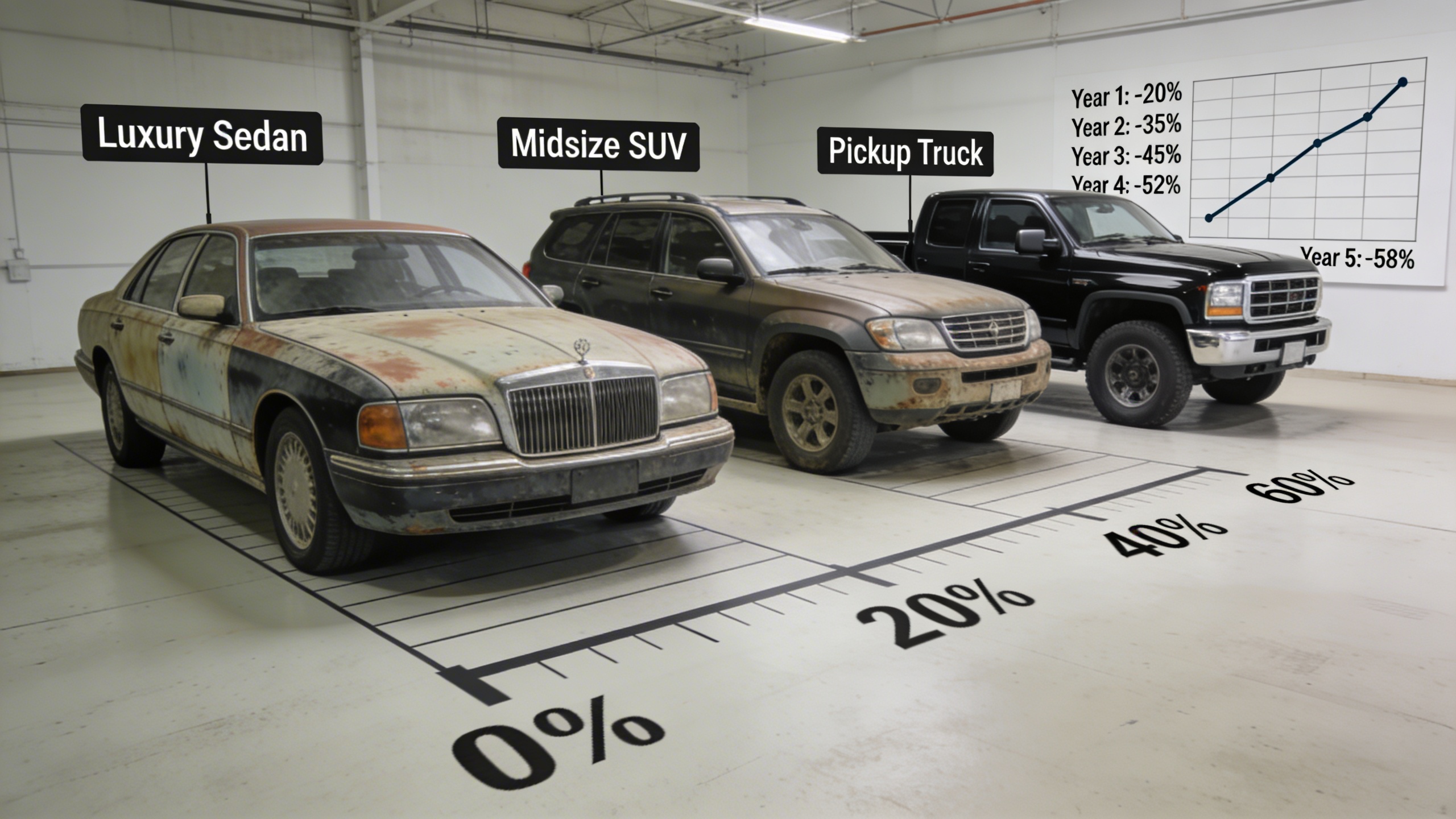

Three vehicles staged on a depreciation scale with percent markers, visualizing which models resist value loss and supporting wholesale used cars for sale research

The Tax Advantage Reality

When Trade-Ins Win the Math Game

Tax credit mechanics matter. In more than 40 states, your trade-in value reduces the taxable amount of the new car purchase. Example: Texas buyer trades in at $38,000 toward a truck and avoids 6.25% tax on that portion—that's roughly $2,375 saved. If a private buyer offered $4,500 more, the after-tax difference shrinks to around $2,125. Not nothing, but no longer a slam dunk. Some states vary, and a few offer no trade-in tax benefit at all, making private sales more compelling.

Time and risk also come into play. Private sales typically take two to four weeks, with multiple test drives and back-and-forth on price. Craigslist and Facebook Marketplace are still crowded, but the FTC reports a measurable scam rate around 5% in peer-to-peer transactions. Proper bill of sale, confirmed funds (bank cashier's check verified at the branch), and correct title transfer are nonnegotiable.

When a Trade-In Quietly Wins

Three common scenarios tilt the decision toward a trade-in: fast upgrades, complex titles, and borderline emissions or inspection issues. If your state requires smog or safety checks pre-sale (hello, California smog stations and New York safety inspections), a dealer can absorb that process.

Private Sale Sweet Spots

High-demand models change the math. Toyota Tacomas, Jeep Wranglers, and late-model half-ton pickups can generate bidding wars in the USA heartland. In the Midwest and Mountain West, where trucks are tools, not ornaments, private premiums spike—farm and contractor demand can add 10–25% over middling dealer bids.

Bottom line: If you've got something desirable, documented, and clean—service records, one-owner Carfax, fresh tires—you're leaving real money on the table with a trade. If your car has surprises, or you need to execute same day, trade-in convenience carries weight.

Understanding Depreciation

Why Your Car's Value Slips

Depreciation is ruthless early, then grudging later. Across USA datasets, the first year usually wipes out 20–30% of MSRP. Years two through five eat about 12–15% annually, totaling around 60% by year five for the average vehicle. Trucks buck the trend, luxury sedans bear the brunt, and EVs—well, it's complicated.

Use a simple frame: residual value equals MSRP times (1 minus annual rate) to the power of years. Example: a $40,000 SUV dropping 18% in year one lands at $32,800. Layer on mileage adjustments—plan for a 10–12% value hit per additional 10,000 miles above class norms—and post-warranty cliffs.

"Depreciation is ruthless early, then grudging later. The first year usually wipes out 20–30% of MSRP."

Retention Leaders: Trucks, Icons, and Select Hybrids

Five-year retention champions consistently include the Toyota Tacoma, Chevrolet Corvette, Ford F-Series, Jeep Wrangler, and Porsche 911. The reasons vary: proven durability, constrained production, cult followings, and lifestyle utility. Some low-mileage 911s have even defied gravity, flirting with appreciation when spec and scarcity align.

Contrast that with luxury sedans, where steep MSRPs, tech churn, and soft used demand conspire toward 60–65% five-year depreciation. Great deals for buyers. Tough sledding for first owners who paid sticker.

EVs: A Moving Target

The USA EV market is volatile. Rivian's early resale performance, Tesla's price adjustments, and ongoing software/battery improvements mean last year's brilliant purchase can look questionable today. Case in point: owners who bought a 2022 electric pickup around $75,000 and exited near $39,000 by 2026 experienced nearly 48% value erosion.

Depreciation-Aware Buying Strategy

If you plan to sell within three years, start by buying the right car. Vehicles with proven five-year retention—Tacoma, Wrangler, F-Series, Corvette, 911—are safer parking spots for your cash. Hybrids, particularly from Toyota and Honda, often outpunch peers on resale when gas stays above $3.25.

Your Playbook: Step-by-Step to Maximize Net Proceeds

Here's a pragmatic, no-filler process that works across most USA states and vehicle types. Adjust for your local rules and the vehicle's demand profile.

  1. Get three real trade-in offers. Hit a franchised dealer, a national used retailer, and an online player. Ask for written offers good for seven days. Note sales tax implications in your state.
  2. Pull a fresh vehicle history report and gather documentation. Maintenance records, recalls addressed, warranty status, key count (two keys add value), and any major component replacements.
  3. Fix cheap optics. Headlight restoration, paintless dent repair, a pro detail, floor mats. Sub-$400 can lift perceived value by $1,000-plus on many mainstream cars.
  4. Price intelligently for a private listing. Use sold comps, not dreamers. If your best trade is $22,000 and the market shows $25,000 sold, list at $25,900 and be ready to land at $24,800–$25,200 if interest is normal.
  5. Stage trust. Bank-branch test drives, daytime only; driver's license photo held; insurance verified. Cashier's check verified in person. Bill of sale and odometer disclosure prefilled.
  6. Set a decision deadline. If no serious bites in seven days, take the trade and reap the tax advantage before incentives move the market against you.
"Don't chase the absolute last dollar if it costs you weeks and introduces risk. Aim for the best net outcome within a defined time window."

Key Numbers to Keep in Your Back Pocket

  • Private-sale premium: often 10–20% vs. trade-in
  • Dealer resale markup target: 20–30%
  • Year-one depreciation: 20–30%; five-year total near 60% for the average car
  • Mileage penalty: roughly 10–12% per extra 10,000 miles above norm
  • Tax savings: trade-in credits apply in 40+ states; rates vary by state

One last point. Don't chase the absolute last dollar if it costs you weeks and introduces risk. Aim for the best net outcome within a defined time window. Put process ahead of luck, and the market—quirky as it's—usually rewards the prepared.