Trade-In vs. Private Sale

The Real Math of Depreciation in the USA

AUTO FINANCE GUIDE 2026

The Great Vehicle Value Decision

Sell your car fast or squeeze every dollar? It's the classic fork in the road. In the USA's used-vehicle market—39 million transactions a year—your choice between a trade-in and a private sale can shift your net by thousands, shape your taxes, and even dictate your timing strategy as prices cool post-pandemic highs. And underneath it all sits depreciation, relentless and predictable in the long run, merciless in the short.

Let's be blunt: convenience has a cost; patience has a premium. The play is to understand the spread, know when to take the sure thing, and recognize when a couple weekends of showings turns into real money. Then, anchor those decisions with a grasp of how vehicles actually lose value—by segment, region, powertrain, and even seasonality in the USA.

"Convenience has a cost; patience has a premium."

We'll map the trade-in versus private-sale calculus, then decode depreciation with hard numbers and brand-by-brand realities. If you're shopping platforms and want a Carvana alternative or a CarMax alternative, the landscape is wider than it looks, and sharper if you know where to aim.

Trade-In vs. Private Sale: What Maximizes Value for You in the USA?

On average, U.S. private sellers net 15–30% more than trade-ins for similar vehicles, according to 2025 analyses from Kelley Blue Book and Edmunds. That's not trivial. A 2022 Toyota Camry LE with 50,000 miles averaged roughly $18,500 on a trade versus $21,200 in a private deal. Ford F-150s saw an even bigger delta: around $25,000 versus $29,800. Trucks often buck the curve—demand in the South and Midwest keeps bids lively.

But time is money. Expect a private sale to take 2–4 weeks and soak up 15–20 hours of work: listing, messaging, vetting buyers, meeting, paperwork, payoff logistics if there's a lien. Dealers collapse that into a day or two, handle the title transfer, and sometimes toss in incentives that matter when inventory bloats. In 2026, economists at Cox Automotive expect more aggressive dealer behavior—yes, including EV bonuses—to pry trade-ins loose.
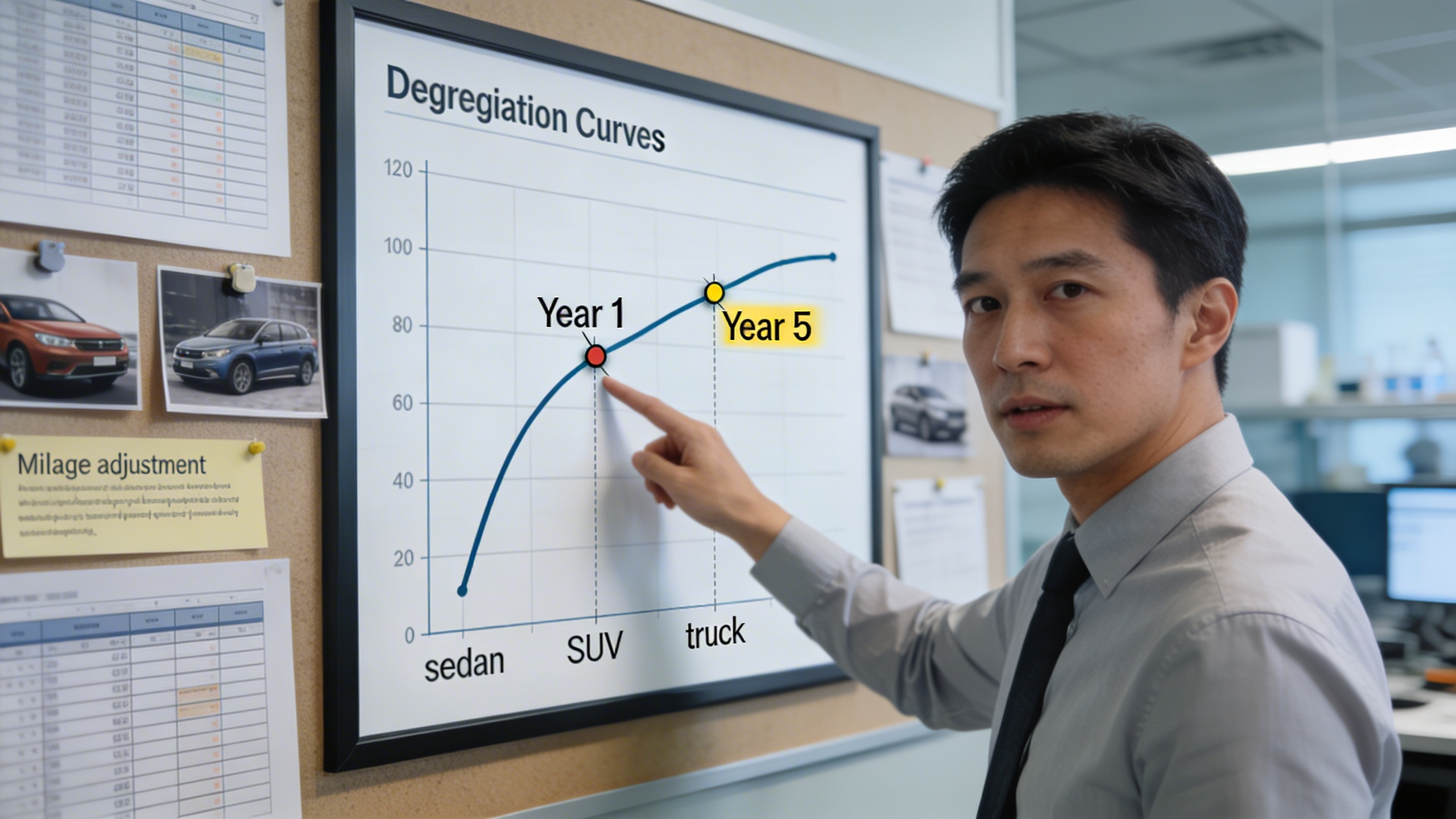

Analyst presenting vehicle depreciation curves and mileage adjustments to illustrate which cars hold value, useful for wholesale used cars for sale research

When Each Strategy Wins

Where you live inside the USA shifts the odds. In California, private-sale premiums can hit 22%, particularly for EVs and hybrids where coastal demand runs hot and incentives stack. In Texas and neighboring states with dense dealer networks, the gap narrows toward 12%—plenty of competition and quicker lot turns flatten the spread. Winter in the Upper Midwest? Sedans soften when snow flies; a dealer's instant number can beat waiting out the thaw.

Taxes tilt the field too. Many states reduce sales tax on the new (or newer) purchase by your trade-in value. A Texas seller trading a $32,000 truck effectively saved about $1,800 at a 6.25% rate—so the deal's "real" value wasn't just the check. If you go private sale, that offset vanishes, though you might still come out ahead if demand's in your favor.

When a Trade-In Wins

Speed, simplicity, and risk control. If your car has cosmetic issues you don't want to fix, a payoff that complicates escrow, or you're buying a new vehicle today, the trade-in can be the cleaner choice. Dealers take on reconditioning and retail risk. In volatile segments (luxury sedans, high-mile EVs) where prices can slide, the sure thing looks smarter.

Dallas Trade-In Success Story

A 2021 Ford F-150 owner took $32,000 in trade toward a new Silverado, saving about $1,800 in Texas tax and walking out in one afternoon. Private-sale comps sat around $35,200, but the clock mattered; the family needed the new truck for a cross-state move. That trade penciled—speed premium accepted.

And there's apply. Walking in with verified offers—yes, printouts help—nudges the trade-in number. Some online buyers and dealer networks now compete in real time; use them. If you're looking for a Carvana alternative that still offers instant cash bids, marketplaces like VirtualCarHub.com aggregate wholesaler interest, then let you pivot: trade now or list to consumers if the gap's juicy.

When a Private Sale Wins

Vehicles with durable demand—pickups, Wranglers, certain Toyotas—tend to pull strong private money, often within days in the right zip codes. Well-kept cars with clean Carfax histories and documented service fetch premiums because buyers see—and pay for—certainty. In Los Angeles, a 2023 Model 3 moved privately for $34,500 after sitting at a $28,000 trade figure. The seller waited 18 days and pocketed the spread. Worth it.

"If you can stage photos, scrub the interior, assemble records, and field calls, you control the story and the final price."

The Depreciation Reality

Understanding Car Depreciation: Why Value Falls—and Which Vehicles Hold Fast

Depreciation is a curve, not a cliff—although Year 1 can feel like one. Typical U.S. patterns: 20–30% in the first year, then ~15% annually through Year 5, for a cumulative ~60%. Mileage taxes value at roughly ten cents per mile above class norms, condition amplifies the penalty, and market supply—fleet returns, rental sell-offs, and lease waves—pushes segments up or down.

Powertrain matters. EVs saw steep early drops in 2024–2025 as battery tech moved fast and supply widened, with some luxury EVs retaining under 55% at five years. Hybrids went the other direction—sustained demand and modest production kept residuals high. As battery costs trend down and federal/state incentives normalize under the Inflation Reduction Act framework, late-2026 onward should show softer EV depreciation, but not overnight.

"Depreciation is a curve, not a cliff—although Year 1 can feel like one."

Segment dynamics are blunt. Trucks and body-on-frame SUVs age gracefully in the USA because utility never goes out of style and parts networks are vast. Sports cars with limited production and loyal followings—think Corvette—resist gravity more than volume sedans. Post-warranty drop-offs (Years 4–6) can bite brands with expensive maintenance reputations; certified pre-owned programs sometimes cushion it.

Retention Standouts

Data across 1.4 million vehicles shows the usual heroes. Toyota Tacoma hovers near 73% retained value at five years. Ford F-Series and Toyota Tundra anchor full-size strength near 68–70%. Jeep Wrangler sits in the high 60s, propped up by lifestyle demand. Corvette is the sports-car outlier, happily defiant of normal curves. At the other end, big luxury sedans and certain luxury EVs shed value fast—too much supply, shrinking buyer pools.

Real-World Los Angeles Example

A 2023 Tesla Model 3 had a $28,000 trade figure at a national chain. Private sale closed at $34,501 on Autotrader after 18 days, lifted by local EV demand and California's layered incentives ecosystem. Financing came through quickly; buyer urgency did the rest.

The translation for sellers: if you're holding a truck or Wrangler in a Sun Belt market—Texas, Arizona, Florida—you're selling a liquid asset. In coastal metros with EV enthusiasm, late-model Teslas can leap above algorithmic bids when private buyers compete. Family sedans in snowy regions during winter? Expect tougher sledding.

How to Choose: A Practical, USA-Focused Framework

Start with your numbers, not your hunch. Pull three estimates: trade-in (dealer or instant cash), wholesale auction proxy (to gauge dealer floor), and private-sale comps (mileage-adjusted). If the private-sale premium is under 10% after taxes and your time, trade it. Over 15% and the car's in demand? List it and commit to a two-week sprint.

Next, factor taxes by state. Many states net sales tax only on the difference between your new purchase price and trade-in. If you're in states like Texas, Ohio, or Illinois, that reduction can reclaim a chunk of the trade-in gap. In states without this credit, private-sale economics get a boost.

Then, check timing. Used prices dropped 8.2% year-over-year in 2025 and leveled into 2026, with trucks expected to appreciate modestly due to tariff risk on imports. If you're selling a mainstream sedan in September before winter inventory swells, moving quickly could beat waiting for spring. Trucks and off-roaders, conversely, sell year-round, with mild surges around tax-refund season.