How to Spot Flood or Salvage Damage

A Buyer's Step-by-Step Guide with Auction Pricing and Return Protection

Used Car Buyer's Guide — July 2026

Start with the Paperwork

Title, History Reports, and VIN Verification

Buying a used car in the USA can feel like walking a tightrope: great deals exist, but hidden flood or salvage damage can turn a bargain into a nightmare. This guide walks you through practical, step-by-step checks, paperwork verification, and smart use of car auction access for buyers to minimize risk. We'll draw on concrete examples and lessons learned from dozens of inspections across Gulf Coast, Midwest, and West Coast markets.

We'll cover title and history checks, physical inspections (from odors to electronics), VIN cross-checking, mechanical red flags, and how to use transparent auction pricing and return policies to your advantage. If you plan to bid at auctions or buy off lease cars below retail, these steps matter more than ever.

Step 1: Always run a history report. Use NMVTIS, NICB, and Carfax together — each source catches different issues. Pull the full report, not just a summary. Look specifically for terms like "flood," "salvage," "rebuilt," "water damage," or "insurance loss." In 2024, Carfax flagged about 12% of used transactions with undisclosed salvage or flood titles — don't assume a clean listing equals a clean title.

Step 2: Compare the title document to the history report. Titles can be "washed" by rebranding in states with looser rules — Florida, Texas, and Nevada have more issues. If the title shows frequent out-of-state transfers, ask why. If the seller resists sharing the title, walk away.

Step 3: Cross-check the VIN. Run the VIN through two or three services and make sure the vehicle description — model year, trim, engine — matches across them. Minor mismatches can hide rebuilt components. If the VIN is stamped differently on multiple panels or the plates differ, that's a major red flag.

"In 2024, Carfax flagged about 12% of used transactions with undisclosed salvage or flood titles — don't assume a clean listing equals a clean title."

Step 4: Use auction platform protections. When you have car auction access for buyers in the USA, the platform should display history links and an explicit return policy. VirtualCarHub.com, for example, integrates history checks into listings and offers a 7-day or 500-mile return window on eligible purchases — this gives you breathing room to uncover title issues after purchase.

Troubleshooting Paperwork Discrepancies

If a report shows a salvage event in one source but not another, request VIN-specific documentation from the seller and compare dates. Title-washing often shows as a salvage mark in older records; if you find one, insist on a certified mechanic inspection or decline the purchase. If you suspect title washing, contact NICB and file a report — the NICB keeps databases that can reveal prior branded titles, and they helped recover multiple flood-damaged cars mistakenly listed as clean in 2023–2024.
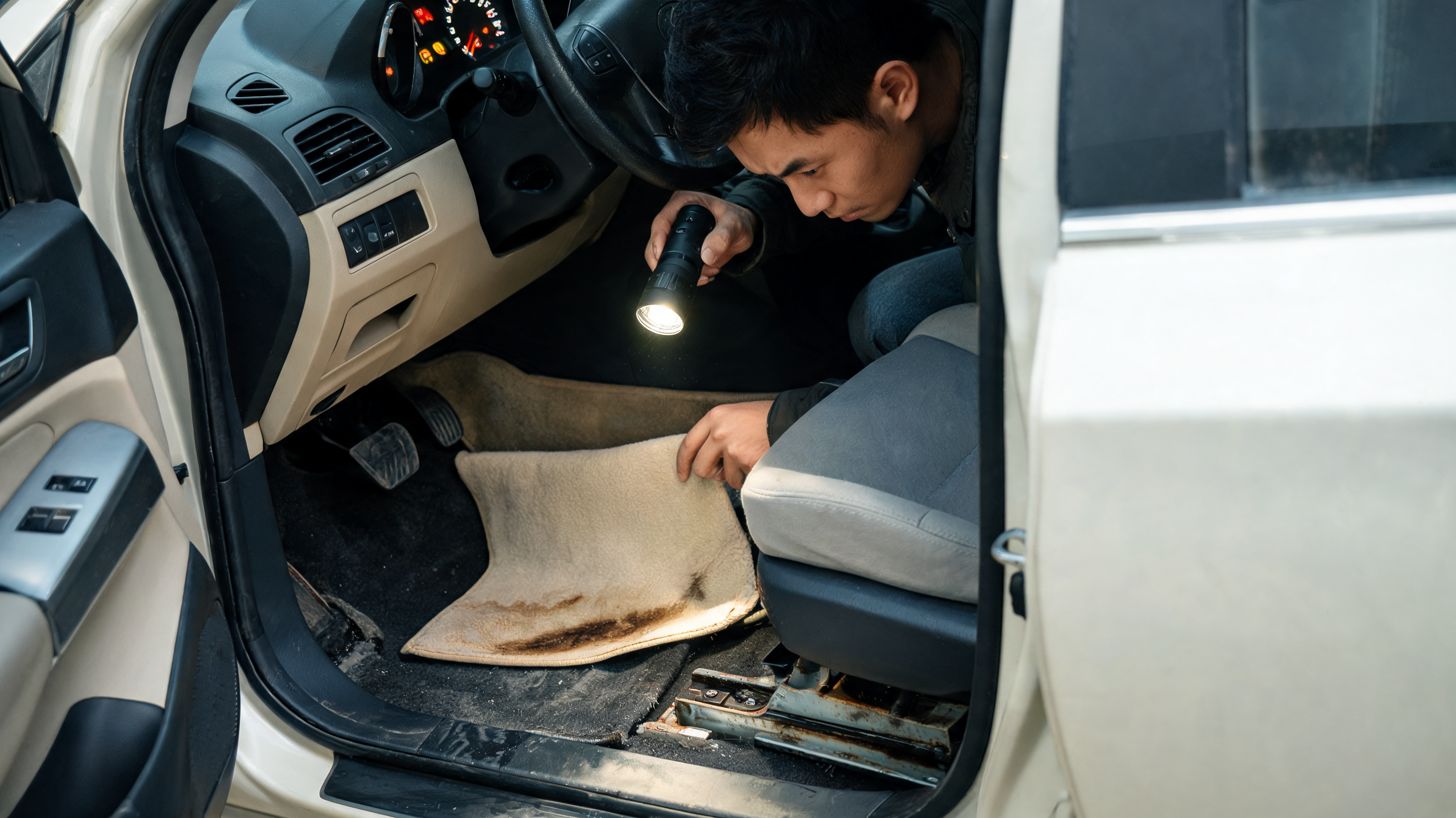
Buyer checking a used car interior for musty odors, carpet stains, rust, and electronics during an inspection for transparent car pricing.

Physical Inspection Checklist

Smells, Stains, Rust, and Electronics

Step 1: Smell test. Open the interior and inhale. Musty, moldy, or chemically sweet odors (used to mask smells) are clues. Flood water leaves organic stains and a mildew scent that penetrates foam and fabric, and that smell rarely goes away completely.

Step 2: Visual scan under carpets and mats. Lift floor mats, pull up the carpet edge near the door sills and rear seats, and inspect for brownish stains, water lines, or rust on seat frames. Don't forget the trunk — inspect the spare-tire well for sediment, mud, or rust.

Step 3: Doors and interior plastics. Remove the rubber door seals slightly and look for silty deposits or discoloration. Check for white powdery deposits (mineral deposits) on interior plastics — this can indicate immersion. Run your fingers along seams; if residue flakes off, that's a clue.

Step 4: Corrosion on small metal parts. Look at seat bolts, interior switches, under-dash screws, and fuse boxes. Corroded screws or pitted metal in places not exposed to road salt suggest prior submersion.

"Flood water leaves a mildew scent that penetrates foam and fabric — and that smell rarely goes away completely."

Electronics and Mechanical Checks

Turn everything on — windows, infotainment, climate controls, interior lights, instrument cluster. Flood-damaged wiring often causes intermittent failures: a fan that runs sometimes, lights that flicker, or a radio that reboots. Pop the hood and check for water lines or a muddy residue in the airbox, oil dipstick, and transmission fluid. Water in oil looks milky; that's a non-starter.

Case Study: What I Found in New Orleans

I inspected a used full-size SUV listed as "clean" that had been driven during coastal storms. The exterior looked fine. Under the carpet I found staining and a sweet chemical odor from an aftermarket cleaner. Wire connectors at the fuse box were corroded. The car passed a quick road test but failed a detailed diagnostic — multiple sensors recorded intermittent faults that only appeared after a day of driving. I returned to the auction and walked away. Saved myself $6,about 500 later.

Undercarriage, Suspension, and Structural Red Flags

Step 1: Inspect the undercarriage. Use a flashlight or ramp and look for rust patterns: surface rust on exhaust is normal, but thick bubbling rust, missing undercoating, or recent welds on structural rails indicate significant prior damage.

Step 2: Check suspension and control arms. Bent control arms or mismatched welds often show prior collision repair or flood-related structural stress. Push down on each corner of the car; it should rebound smoothly once. Odd noises or uneven rebound may indicate damaged shocks or frame issues.

Step 3: Wheel wells, brake lines, and ABS sensors. Corrosion on brake lines or sensor connectors is dangerous and expensive to fix. Look for frayed wiring, white corrosion on connectors, or dampness around sealed joints.

Step 4: Consider regional factors. Off lease cars below retail often come from fleets that operate nationwide; Even so, vehicles from Gulf Coast states carry higher flood risk. An inexpensive off-lease SUV from Louisiana may carry significantly more risk than one from Utah.

Auction Pricing & Return Protections

Using Transparent Pricing to Your Advantage

Modern online auction platforms and wholesale channels increasingly offer direct pricing and buyer protections. A transparent starting price reduces the need to chase "too good to be true" deals. If a platform publishes guaranteed pricing or a 7-day/500-mile return policy, use that as utilize when evaluating risk.

Platforms like VirtualCarHub.com list vehicles with condition reports, VIN history links, and a clear return policy. That combination lets you buy with confidence: you can do a thorough post-delivery inspection and return within the policy if flood or salvage issues surface that weren't disclosed at the time of sale.

Bid with a plan. Know your absolute top price including potential remediation costs for flood-related repairs. If a car looks dubious but falls within the platform's return window, factor the return logistics and restocking into your plan — those can eat time but protect your wallet significantly.

"Trust your instincts. If a deal feels rushed or a seller dodges questions, back out. Money today isn't worth months of electrical nightmares."

How to Structure a Pre-Bid Inspection

If allowed, get a third-party mechanic to inspect the vehicle at the auction yard or after delivery. For cars sold online with a return policy, arrange a service appointment within 48–72 hours of delivery to run diagnostics, lift inspections, a compression check, and a full fluid analysis.

A car that idles fine for 10 minutes may still show electrical gremlins after 24–48 hours of use. Another mistake buyers make: assuming a rebuilt title is always safe. Rebuilt titles can be fine if repaired correctly, but you must verify the repair documentation and get a mechanic's sign-off before committing.

Real Dealership Results

Dealers and fleet operators are already adjusting to the flood and salvage issue by tightening inspections and using better digital records. In Gulf Coast metropolitan areas, some wholesale lanes now require NMVTIS snapshots before listing vehicles. A regional fleet operator in Texas started using VIN cross-checking and mandatory undercarriage photos before sending vehicles to auction — their refurb rates fell by 18% and customer complaints about water damage disappeared within a year.

Why this matters for individual buyers: when dealerships adopt strict checks, the overall pool of risky cars declines. But retail buyers must still do their own verification — auctions and wholesalers can still make mistakes or omit past damage, especially during high-volume sales seasons.

Legal Protections for USA Buyers

Consumer protection laws vary by state — some states have stronger lemon laws and implied warranty rules. If you buy from an auction seller in another state, familiarize yourself with interstate title transfer rules and any potential tax or registration issues before finalizing the purchase. A salvage title in one state may be eligible for rebuilt registration in another, depending on paperwork and inspection requirements.

Final Pre-Payment Checklist

  1. Run two history reports and compare results side by side.
  2. Do a smell and stain inspection — interiors, trunk, and spare-tire well.
  3. Test all electronics and run live diagnostics if possible.
  4. Inspect undercarriage, suspension, and brake components.
  5. Check the title for out-of-state history and frequent transfers.
  6. Plan a post-delivery mechanic check if returning is allowed within policy.

Bonus tip: Photograph everything on delivery — VIN plates, odometer, title, and any damage you find.

Related Articles